PROLOGUE — A Treaty Made Not by Force, But by Deception
Joshua 9 records the story of the Gibeonites, who secured a treaty with Israel not through direct battle, but through remarkably clever deception. This chapter shows the long-term consequences that can follow a decision made without careful verification.
ACT ONE — Allied Canaanite Kings, and Gibeon’s Different Strategy (verses 1–2)
“And it came to pass, when all the kings which were on this side Jordan, in the hills, and in the valleys… heard thereof; That they gathered themselves together, to fight with Joshua and with Israel, with one accord.”
While most Canaanite kings chose to unite in armed resistance, the Gibeonites chose an entirely different strategy.
ACT TWO — An Elaborate Disguise (verses 3–13)
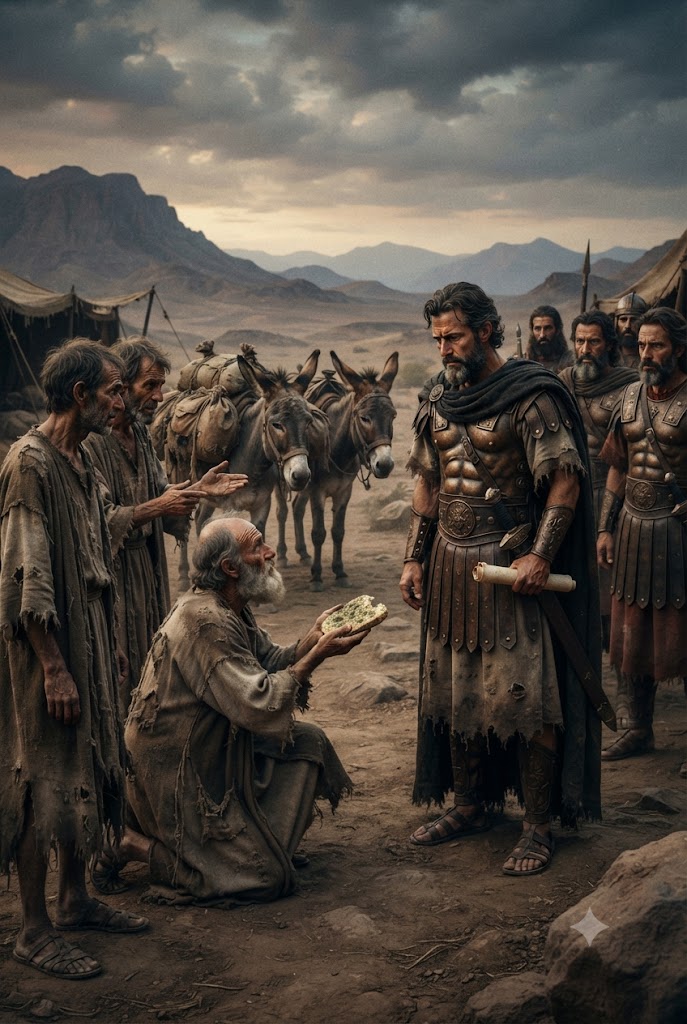
“And when the inhabitants of Gibeon heard what Joshua had done unto Jericho and to Ai, They did work wilily… and took old sacks upon their asses, and wine bottles, old, and rent, and bound up; And old shoes and clouted upon their feet, and old garments upon them; and all the bread of their provision was dry and mouldy.”
Old and rent… dry and mouldy. The Gibeonites prepared an extraordinarily elaborate disguise, presenting themselves as travelers from a very distant land. Their strategy was not force, but pure deception.
They spun a false story before Joshua.
“We be come from a far country: now therefore make ye a league with us… This our bread we took hot for our provision out of our houses on the day we came forth to go unto you; but now, behold, it is dry, and it is mouldy.”
ACT THREE — A Decision Made Without Verification (verses 14–15)
The most important mistake of this chapter is pointed out briefly, yet powerfully.
“And the men took of their victuals, and asked not counsel at the mouth of the LORD. And Joshua made peace with them, and made a league with them, to let them live: and the princes of the congregation sware unto them.”
Asked not counsel at the mouth of the LORD. This brief sentence carries the central lesson of the entire chapter. Joshua and the leaders judged only by visible evidence (old bread, worn-out sandals), skipping the crucial step of inquiring of God.
ACT FOUR — The Deception Uncovered, Yet the Vow Kept (verses 16–27)
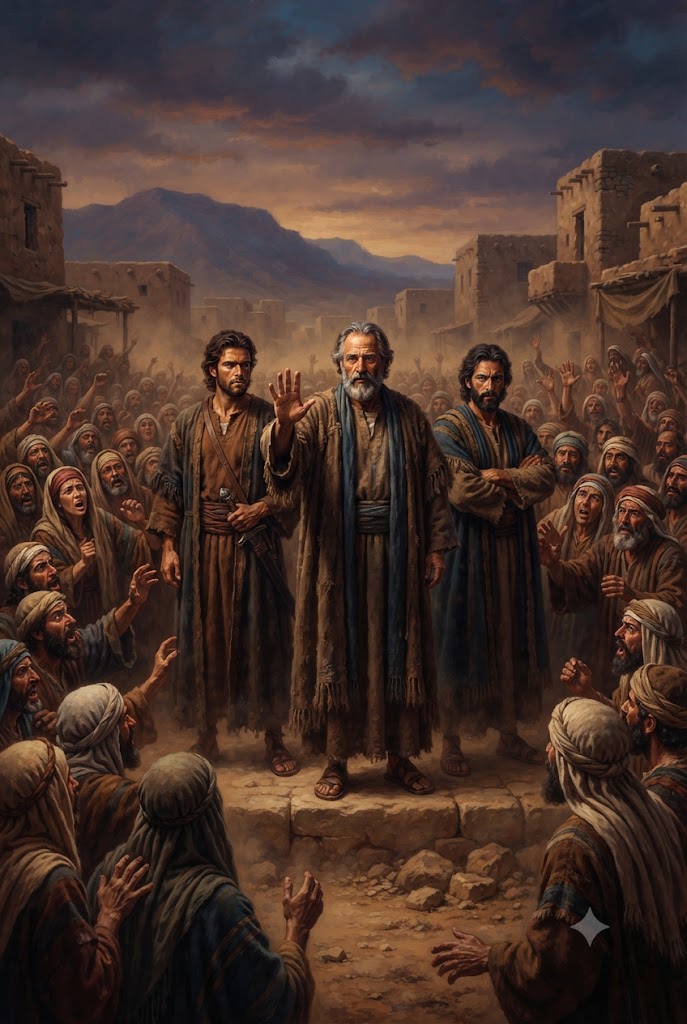
“And it came to pass at the end of three days after they had made a league with them, that they heard that they were their neighbours, and that they dwelt among them.”
The deception soon came to light, and the congregation was outraged. But the leaders’ response was remarkably striking.
“But all the princes said unto all the congregation, We have sworn unto them by the LORD God of Israel: now therefore we may not touch them… lest wrath be upon us, because of the oath which we sware unto them.”
We have sworn… we may not touch them. Even though that vow had been secured through deception, an oath made in the name of the LORD could never be lightly broken. Instead, the Gibeonites were permanently incorporated into the Israelite community as hewers of wood and drawers of water — a creative resolution that was both a penalty and yet not total exclusion.
REFLECTION — A Decision That Inquires of God, Not Merely Appearances
The most practical lesson Joshua 9 gives us is the danger of judging hastily by visible evidence alone. Even Joshua made this mistake — and its consequences endured across generations (this treaty violation later brought serious consequences during the reign of King Saul, 2 Samuel 21).
Before making an important decision, do you have the habit of first inquiring of God, rather than judging by appearances alone?
NEXT EPISODE PREVIEW
Joshua Chapter 10 — the battle against the southern alliance of kings, and the famous miracle of the sun standing still, follow.
Tags: #Joshua9 #GibeonsDeception #MouldyBread #AskedNotCounselOfTheLord #WeHaveSwornWeMayNotTouchThem #HewersOfWoodDrawersOfWater #Joshua #BibleDevotional #ChristianBlog #BibleStudy #OldTestament #Bible #Church #Devotion #Christianity #DecisionsInquiringOfGodNotAppearances #2Samuel21 #DailyDevotional