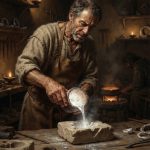
Judges Chapter 17: The Private Shrine in Micah’s House
With Samson’s story finished, the second major section of Judges wraps up. Chapters 17 through 21 have a different character […]
Judges Chapter 17: The Private Shrine in Micah’s House 게시물 읽기"
udges is the seventh book of the Old Testament, consisting of 21 chapters. It picks up where Joshua left off — but instead of promises fulfilled, it traces Israel’s slow unraveling.
The book opens by cataloguing the Canaanite nations Israel failed to fully drive out (chs. 1–2), then settles into a repeating cycle that structures the rest of the book: Israel sins, God allows oppression, the people cry out, God raises up a judge to deliver them, there is peace — until the cycle begins again. This plays out through twelve judges, including Deborah, Gideon, Jephthah, and Samson (chs. 3–16), with each generation sinking a little further than the last.
It closes with two dark, standalone episodes — Micah’s idolatry and the tribe of Dan’s migration, and a civil war sparked by an atrocity against a Levite’s concubine (chs. 17–21) — bound together by a haunting refrain: “In those days there was no king in Israel; every man did that which was right in his own eyes.”
Where Joshua is a story of promises kept, Judges is a story of a people drifting — and a quiet argument for why Israel would eventually cry out for a king.
With Samson’s story finished, the second major section of Judges wraps up. Chapters 17 through 21 have a different character […]
Judges Chapter 17: The Private Shrine in Micah’s House 게시물 읽기"
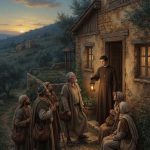
Chapter 17 gave us Micah’s quiet private shrine. This chapter shows how that quietness escalates into organized theft and violence.
Judges Chapter 18: The Tribe of Dan Steals an Idol and a Priest 게시물 읽기"

Anyone reading Judges straight through stops here. All the violence, all the betrayal, all the corruption we’ve seen up to
Judges Chapter 19: The Night at Gibeah, the Darkest Chapter in Judges 게시물 읽기"
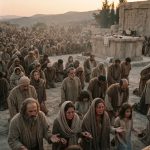
At the end of chapter 19, the pieces of a dismembered body were sent throughout Israel. This chapter shows how
Judges Chapter 20: Israel Draws the Sword Against Its Own Brother 게시물 읽기"
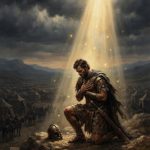
PROLOGUE — Theory Becomes Reality Judges 3 is the chapter where the theological cycle explained in chapter 2 — sin,
PROLOGUE — A Cycle Where Women Leaders Stand Out Judges 4 records the fourth repetition of the cycle, and in