Chapter 17 gave us Micah’s quiet private shrine. This chapter shows how that quietness escalates into organized theft and violence.
The text opens again with that refrain. “In those days there was no king in Israel: and in those days the tribe of the Danites sought them an inheritance to dwell in; for unto that day all their inheritance had not fallen unto them among the tribes of Israel.” This background was already given back in Joshua 19. Dan never properly secured its own portion of land, and eventually had to go looking elsewhere.
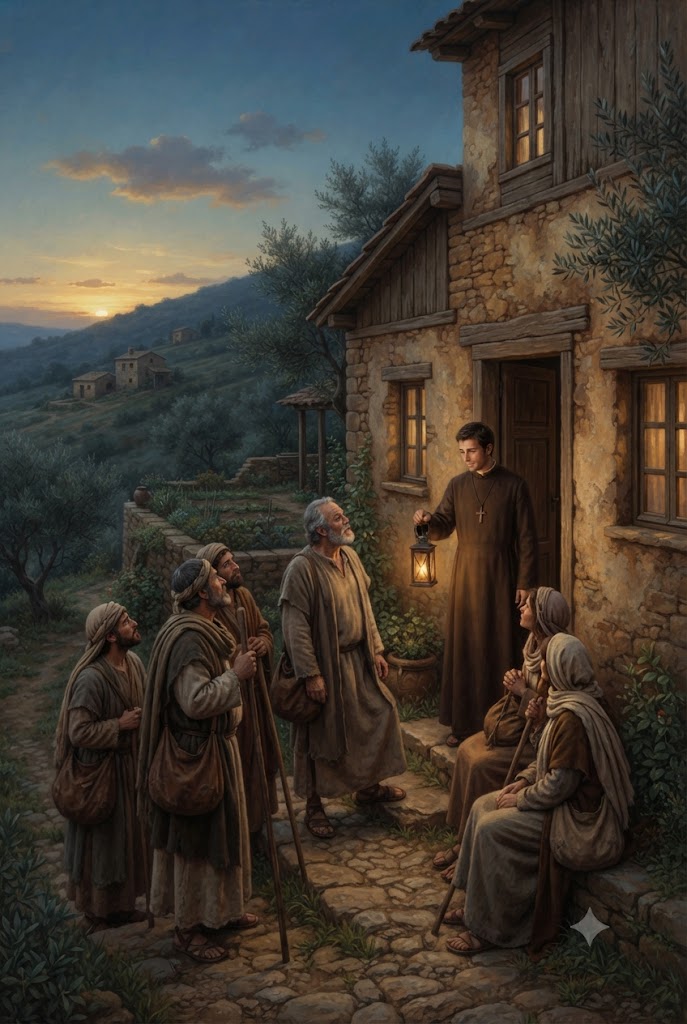
The tribe sends five spies. Passing by Micah’s house, they recognize the voice of the young Levite working there and go in to ask, “Who brought thee hither? and what makest thou in this place? and what hast thou here?” He explains his arrangement with Micah. They ask him to inquire of God for them, and he tells them, “Go in peace: before the LORD is your way wherein ye go.”
That line is already strange. The Levite never checks what these men are actually going to do — he just sends them off with pious language. Religious speech completely detached from actual discernment.
The spies find a city called Laish. “The people that were therein dwelt careless, after the manner of the Zidonians, quiet and secure… and they were far from the Zidonians, and had no business with any man.” Undefended, unallied, an easy target.
They report back, and Dan sends six hundred armed men. Passing Micah’s house again on the way, the five original spies tell the rest about the shrine. They go in and take the ephod, the household gods, and the images.
When the priest protests, the exchange that follows is the bluntest moment in the chapter.
“What have ye done? And they said unto him, Hold thy peace, lay thine hand upon thy mouth, and go with us, and be to us a father and a priest: is it better for thee to be a priest unto the house of one man, or that thou be a priest unto a tribe and a family in Israel?”
The priest’s heart was glad, and he took the ephod and the household gods and went along with the people. This matches exactly what we saw of him at the end of chapter 17, where he calculated God’s blessing in purely formal terms. He’s simply being promoted from one man’s private priest to a whole tribe’s priest. What he’s actually serving still never becomes the question.
Micah finds out too late and chases after them with his men, but Dan threatens him: “Let not thy voice be heard among us, lest angry fellows run upon thee, and thou lose thy life, with the lives of thy household.” Micah gives up and turns back. Everything he made, the whole private shrine he was so proud of, gets taken right in front of him, and there’s nothing he can do about it.
Dan conquers Laish, burns it, rebuilds it, and names it Dan after their ancestor. They set up the stolen images, and Jonathan, grandson of Gershom, and his descendants become the tribe’s priests for generations.
The text closes with a short but heavy line: “And they set them up Micah’s graven image, which he made, all the time that the house of God was in Shiloh.” Shiloh had the real tabernacle, the real priesthood, real worship. Meanwhile, one whole tribe of Israel set up a stolen idol as their god and served it for generations.
Finishing this chapter, you can trace the whole arc clearly — how the quiet personal idolatry of chapter 17 expands into institutionalized idolatry across an entire tribe. What started with one mother’s curse and one son’s confession ends up growing into six hundred armed men, a stolen idol, and a priesthood passed down for generations. Hard to find a better illustration of how a small compromise can grow into something enormous over time.
Tags: #Judges18 #MigrationOfDan #StealingMicahsIdol #TheLevitesBetrayal #ConquestOfLaish #ShilohVersusDan #Judges #BibleDevotional #BibleStudy #OldTestament