PROLOGUE — A Sanctuary That Traveled
Numbers 4 specifies in far greater detail the duties of the three Levite clans introduced in chapter 3 — Kohath, Gershon, and Merari. Israel’s tabernacle was never a fixed building, but a sacred tent that journeyed together through the wilderness. Moving it required extreme precision and reverence.
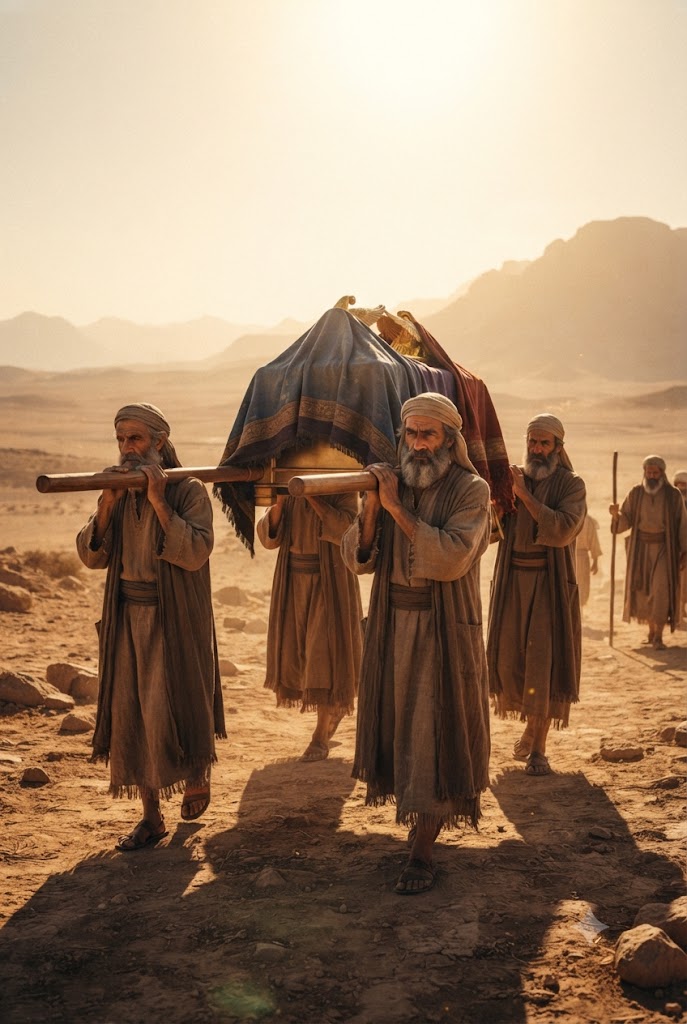
ACT ONE — The Kohathites, Carriers of the Most Holy Things (verses 1–20)
“And when the camp setteth forward, Aaron shall come, and his sons, and they shall take down the covering vail, and cover the ark of testimony with it… and shall put thereon the covering of badgers’ skins, and shall put in the staves thereof.”
Aaron shall come, and his sons. The most holy furnishings — the ark of the covenant, the table, the lampstand, the altar of incense — first had to be wrapped by the priests themselves. Only afterward could the Kohathite Levites carry them on their shoulders.
A grave warning follows.
“But they shall not touch any holy thing, lest they die. These things are the burden of the sons of Kohath in the tabernacle of the congregation.”
Lest they die. This warning compresses the tension of the entire chapter. The Kohathites were given the most glorious task — carrying the holiest furnishings — but it was equally the most dangerous. Direct sight or touch of the holy things was strictly forbidden. The later incident of Uzzah, struck dead for touching the ark in 2 Samuel 6, shows this warning was never an exaggeration.
ACT TWO — The Duties of Gershon and Merari (verses 21–33)
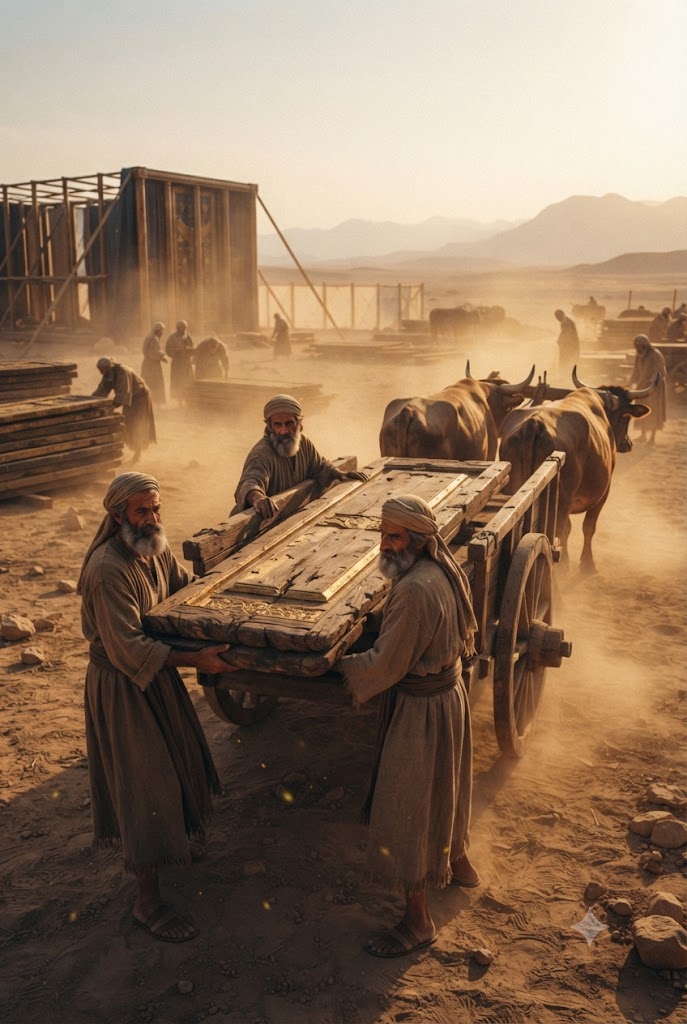
“This is the service of the families of the Gershonites, to serve, and for burdens: And they shall bear the curtains of the tabernacle, and the tabernacle of the congregation, his covering… all that is made for these, so shall they serve.”
The Gershonites were responsible for fabrics and curtains; the Merarites for heavier structural elements — boards, pillars, and sockets. All three clans were assigned burdens suited to their strength and expertise — Kohath required precision and reverence, Gershon required care, Merari required physical strength.
ACT THREE — From Thirty to Fifty Years Old (verses 34–49)
The chapter closes with the specific count of each clan.
“These are those that were numbered of the families of the sons of Levi… from thirty years old and upward even unto fifty years old, every one that came to do the service of the ministration.”
From thirty years old to fifty. The age range for service was precisely regulated — neither too young nor too old, a season balancing experience and physical strength. God’s work was never accomplished by passion alone, but required a prepared maturity.
REFLECTION — The Humility of Carrying What Is Holy
What Numbers 4 shows is that the privilege of participating in God’s work must always be accompanied by reverence. The Kohathites were given the most honored task, yet were required to be the most careful. The same is true when we serve in God’s work today — zeal must be paired with humility before the holiness of the task itself.
As you carry out the work God has entrusted to you, do you hold both zeal and reverent humility for its holiness together?
NEXT EPISODE PREVIEW
Numbers Chapter 5 — regulations for the purity of the camp, and the bitter water test for discerning suspected wrongdoing, follow.
Tags: #Numbers4 #DutyOfTheKohathites #TouchNotTheHolyThings #GershonAndMerari #ThirtyToFiftyYears #2Samuel6Uzzah #Numbers #BibleDevotional #ChristianBlog #BibleStudy #OldTestament #Bible #Church #Devotion #Christianity #ReverenceBeforeHoliness #TravelingSanctuary #DailyDevotional