PROLOGUE — From Conquest to Division
Joshua 13 opens the third major section of this book (the division of the land, chapters 13–21). Immediately after the conquest was summarized in chapter 12, the focus now shifts — from victory to inheritance, from battle to settlement.
ACT ONE — Joshua, Old and Advanced in Years (verses 1–7)

“Now Joshua was old and stricken in years; and the LORD said unto him, Thou art old and stricken in years, and there remaineth yet very much land to be possessed.”
There remaineth yet very much land to be possessed. This verse is a remarkably honest admission — even though the conquest was summarized as complete (11:23, “and the land rested from war”), a considerable amount of land in fact remained unconquered. Scripture never exaggerated the victory.
God specifically listed the regions still unconquered — the five cities of the Philistines, the Geshurites, all the land of the Sidonians, and more. Yet remarkably, God commanded the division of the land to proceed immediately, despite this incompleteness.
“Divide thou it by lot unto the Israelites for an inheritance, as I have commanded thee.”
As I have commanded thee. This reveals a deeply important theological principle — the division of the land never waited for complete conquest. Receiving the inheritance by faith came first; actual possession had to be completed afterward through each tribe’s continued obedience and effort.
ACT TWO — The East Side of the Jordan, Land Already Divided, Reconfirmed (verses 8–14)
Joshua first reconfirms in detail the boundaries of the region east of the Jordan (Reuben, Gad, and half the tribe of Manasseh), already divided in the time of Moses.
“With whom Moses had given, beyond Jordan eastward… for an inheritance… Only unto the tribe of Levi he gave none inheritance; the sacrifices of the LORD God of Israel made by fire are their inheritance, as he said unto them.”
The sacrifices of the LORD made by fire are their inheritance. The distinctive principle of the tribe of Levi, already established in Numbers 18 and Deuteronomy 18 — that God Himself, not land, was their inheritance — is reaffirmed here once more. This principle was important enough to be repeatedly reconfirmed throughout the entire book.
ACT THREE — Detailed Boundaries for Each Tribe (verses 15–33)
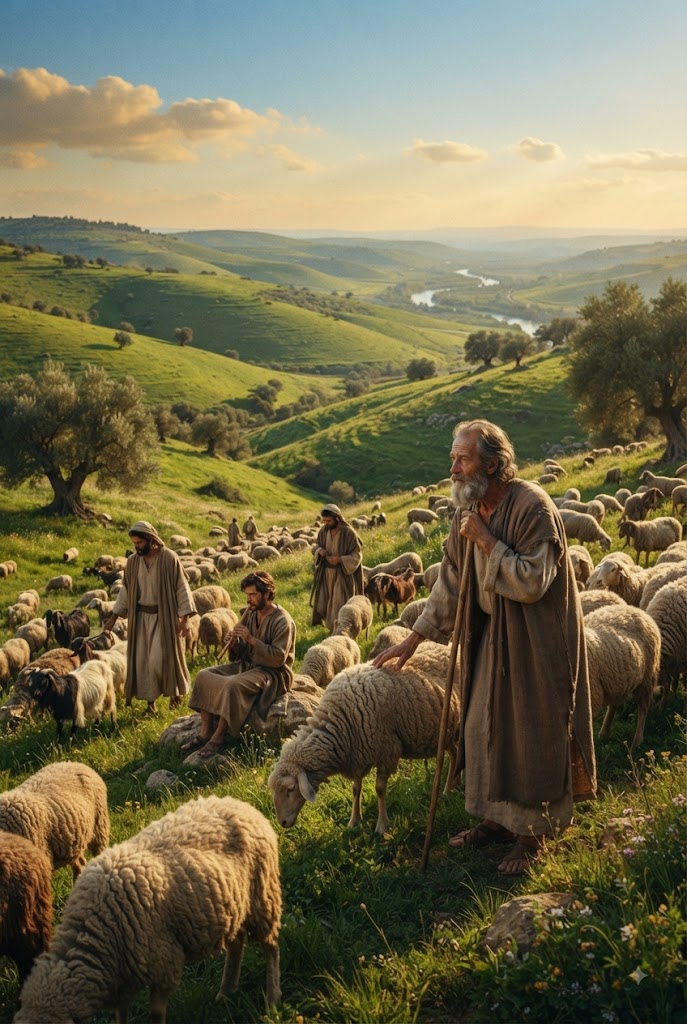
The remainder of this chapter records, in a detailed list of place names, the territory of Reuben, Gad, and half the tribe of Manasseh, each in turn. This list may seem monotonous at first glance, but it served as documentary evidence that God’s promise had been fulfilled not abstractly, but as actual, surveyable territory.
REFLECTION — Obedience That Begins Even Without Completeness
The practical insight Joshua 13 gives us is that God’s promise never waits for everything to be perfectly resolved first. Though land remained unconquered, God commanded the division to begin immediately — inheritance began not with completion, but with a step of faith.
Rather than waiting for every circumstance to become perfect, are you receiving what has already been given by faith, and moving forward?
NEXT EPISODE PREVIEW
Joshua Chapter 14 — the moving scene of Caleb, remembering a promise made forty-five years earlier, requesting the hill country of Hebron as his own inheritance, unfolds.
Tags: #Joshua13 #VeryMuchLandRemains #EastOfJordanReconfirmed #LeviteInheritanceIsTheLord #DetailedTribalBoundaries #DivisionSectionBegins #Joshua #BibleDevotional #ChristianBlog #BibleStudy #OldTestament #Bible #Church #Devotion #Christianity #ObedienceWithoutCompleteness #InheritanceReceivedByFaith #DailyDevotional