Exodus Series — Episode 30
🔥 Prologue — Ordinances for the Things Unseen Instructions had already been given for the great structures of the Tabernacle—the Ark of the Covenant, the table, the lampstand, the frame of the Tabernacle, the bronze altar, and the priestly garments.
Now Exodus 30 turns its attention to smaller things, no less important—the altar of incense, the atonement money to be given for the service of the Tabernacle, the bronze basin for washing, and the specially consecrated anointing oil and incense. These sacred objects may not have stood out visually, but they were essential to completing the whole of the Tabernacle’s worship.
As we move through this chapter, we discover that worship was never made complete by great structures alone—it was also formed through fine sensory elements: fragrance, water, and oil.
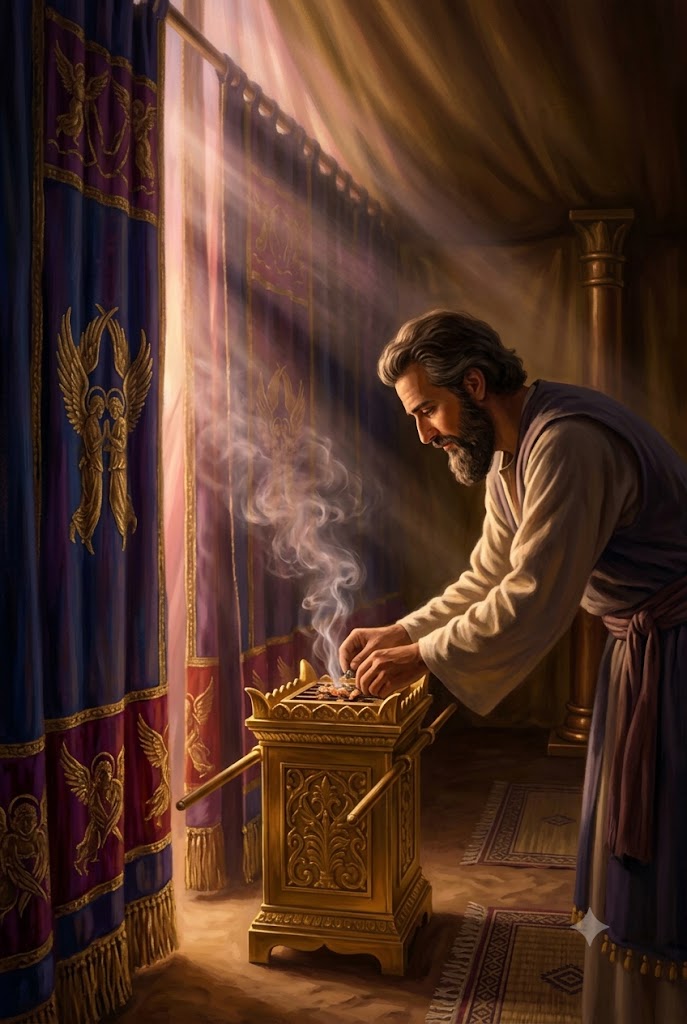
🕯️ Act One — The Altar of Incense (Verses 1–10) “You shall make an altar to burn incense on; you shall make it of acacia wood.”
This altar of incense was instructed to be placed within the Holy Place, directly before the veil separating the Most Holy Place. It was the closest position to the Most Holy Place.
“Aaron shall burn on it sweet incense every morning; when he tends the lamps, he shall burn incense on it. And when Aaron lights the lamps at twilight, he shall burn incense on it.”
Every morning, every evening. This incense followed the same rhythm as the lamp in chapter 27. Worship within the Tabernacle had to continue without a single day’s interruption, morning and evening, without ceasing.
“It is a perpetual incense before the LORD throughout your generations.”
A perpetual incense. This fragrance was never to be interrupted. It symbolically showed that the people’s worship of God must never stop.
A strict warning follows.
“You shall not offer strange incense on it, or a burnt offering, or a grain offering; nor shall you pour a drink offering on it.”
You shall not offer strange incense. This altar was reserved exclusively for the specific holy incense God Himself designated—the recipe for which would be given in detail later in this same chapter. There was no room for improvised human choice.
The regulation is also mentioned that once a year, on the Day of Atonement, the high priest was to apply blood of the sin offering to the horns of this altar.
“And Aaron shall make atonement upon its horns once a year with the blood of the sin offering of atonement; once a year he shall make atonement upon it throughout your generations.”
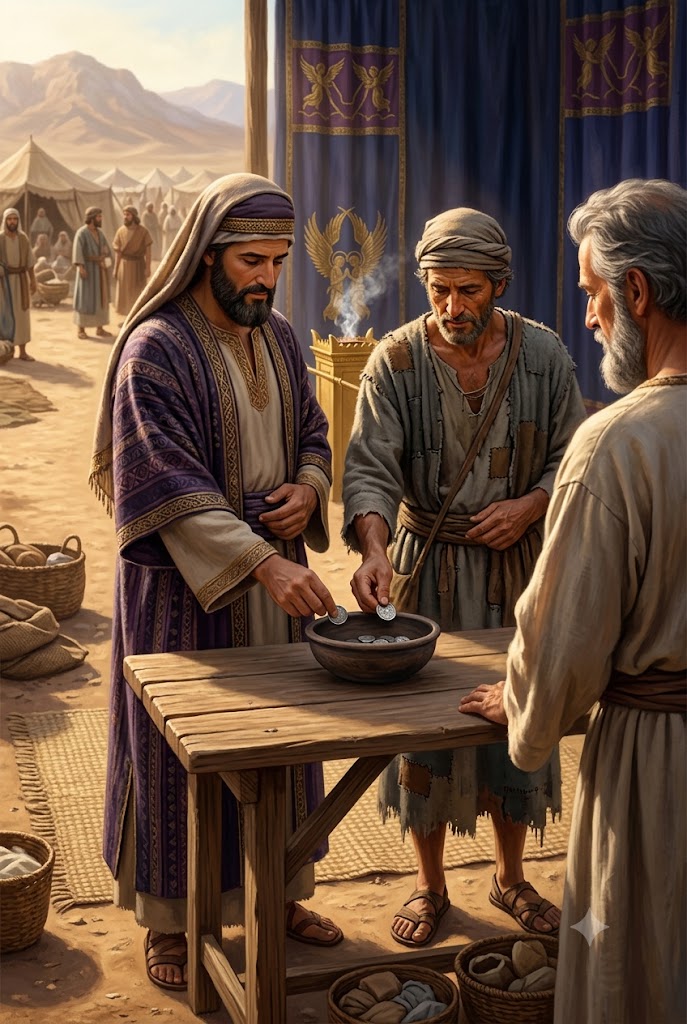
💰 Act Two — The Ransom for a Life (Verses 11–16) The text suddenly shifts from incense to a regulation concerning the census.
“When you take the census of the children of Israel for their number, then every man shall give a ransom for himself to the LORD, when you number them, that there may be no plague among them when you number them.”
A ransom for a life. This regulation is quite distinctive. Why would the mere act of counting people require a ransom? This was a safeguard against the temptation for the act of numbering people to become a way of confirming and boasting in one’s own strength or resources. Through this ransom, the people had to reaffirm, each time, that their lives ultimately belonged to God—not to themselves.
“Everyone included among those who are numbered shall give this: half a shekel… The rich shall not give more and the poor shall not give less than half a shekel.”
The rich shall not give more and the poor shall not give less. A remarkable principle of equality is revealed in this regulation. In measuring the value of a life, wealth made no difference whatsoever. Every person’s life was treated with the same weight before God.
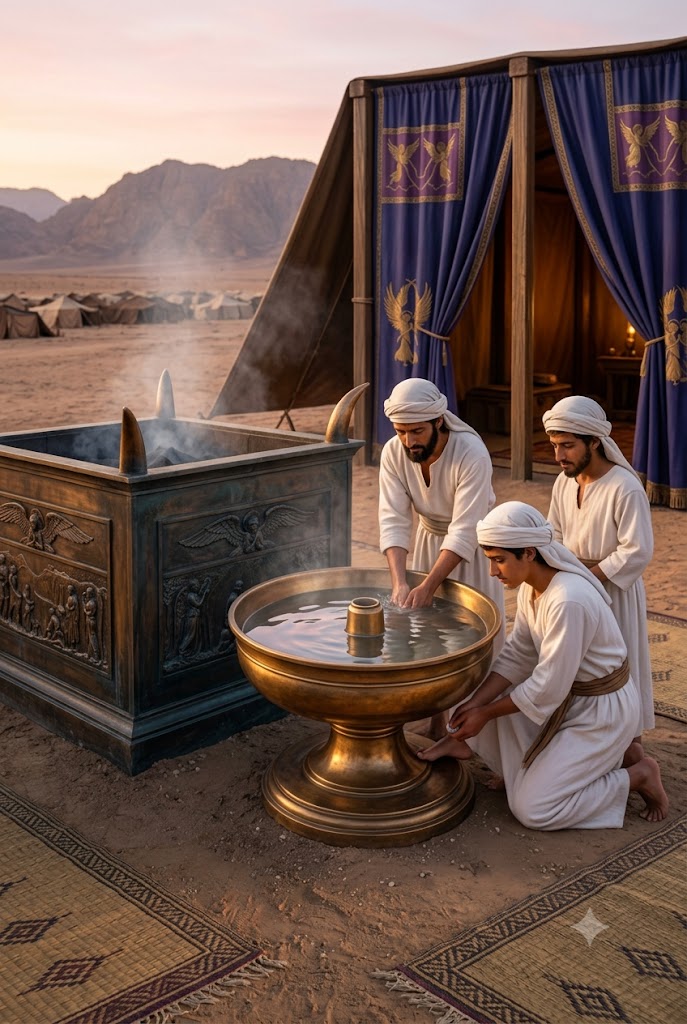
🛁 Act Three — The Bronze Basin, the Anointing Oil, and the Incense (Verses 17–38) Next, instructions are given for the bronze basin used for washing.
“You shall also make a laver of bronze, with its base also of bronze, for washing. You shall put it between the tabernacle of meeting and the altar. And you shall put water in it, for Aaron and his sons shall wash their hands and their feet in water from it.”
Between the tabernacle of meeting and the altar. This location itself was symbolic. After the priest completed the sacrifice at the altar, he had to pass by this basin before entering the tabernacle. Between sacrifice and presence, there stood a place of washing.
“So they shall wash their hands and their feet, lest they die. And it shall be a statute forever to them—to him and his descendants throughout their generations.”
Lest they die. This repeated warning—of death being avoided—continually reminds us of just how serious a matter it was to approach the presence of God.
Now the recipe for the anointing oil is given in detail.
“Take for yourself quality spices—five hundred shekels of liquid myrrh, half as much sweet-smelling cinnamon (two hundred and fifty shekels), two hundred and fifty shekels of sweet-smelling cane, five hundred shekels of cassia, according to the shekel of the sanctuary, and a hin of olive oil. And you shall make from these a holy anointing oil.”
This intricate ratio of ingredients shows that this oil was not an ordinary fragrant oil, but a very specially compounded sacred object.
“This shall not be poured on man’s flesh; nor shall you make any other like it, according to its composition. It is holy, and it shall be holy to you. Whoever compounds any like it, or whoever puts any of it on an outsider, shall be cut off from his people.”
It shall be holy to you. Carelessly imitating the recipe of this oil, or using it for personal purposes, was strictly forbidden. Holiness could not be imitated.
A similarly intricate and solemn procedure follows for the incense.
“You shall make of these an incense, a compound according to the art of the perfumer, salted, pure, and holy… And you shall beat some of it very fine, and put some of it before the Testimony in the tabernacle of meeting where I will meet with you.”
Where I will meet with you. The altar of incense, the incense itself, the anointing oil—the ultimate purpose of all of these was, in the end, one single thing. An encounter with God.
🕊️ Reflection — Faithfulness in the Things Unseen The truth discovered in Exodus 30 is this: worship was never completed by grand structures alone—the Ark of the Covenant, the walls of the Tabernacle. The incense rising continually, morning and evening; the value of a life reaffirmed each time anew; the repeated habit of washing; the meticulously compounded oil—all these fine details had to come together for worship to be made whole.
The unceasing incense asks us something. Is our prayer and worship a flame that burns only on special occasions, or an incense that continues steadily, morning and evening, every single day?
And the regulation requiring the same ransom from rich and poor alike. This reminds us that all lives are equally precious before God. We are constantly exposed to the temptation of measuring our own worth by our achievements or possessions. But our worth does not come from what we have—it comes from the fact that God made us.
Finally, the basin placed between the altar and the tabernacle of meeting. Between sacrifice and presence, there always had to be a place of washing. We too must never neglect the habit of purification before we come into God’s presence.
“Does your worship exist only in grand moments—or is it also filled with the small faithfulness of every single day?”
📣 Coming Up Next Exodus Chapter 31 — The Craftsmen and the Sabbath God fills Bezalel and Oholiab with wisdom and skill, and gives His final instructions concerning the Sabbath. The moment Moses’ forty days on the mountain draws to a close unfolds in the next episode.
#Exodus30 #AltarOfIncense #IncenseThatNeverCeases #RansomForALife #TheBronzeBasin #TheHolyAnointingOil #WhereIWillMeetWithYou #TheExodus #BibleStudy #ChristianBlog #Exodus #OldTestament #Scripture #Church #DailyDevotional #BiblicalFaith #GodsPower