\
PROLOGUE — The Rejected One Is Called
Judges 11 records the story of Jephthah, considered one of the most tragic narratives in all of Judges. A man rejected by his own society is ultimately raised up as the leader who delivers Israel, but his victory comes at a horrific cost due to a hasty vow.
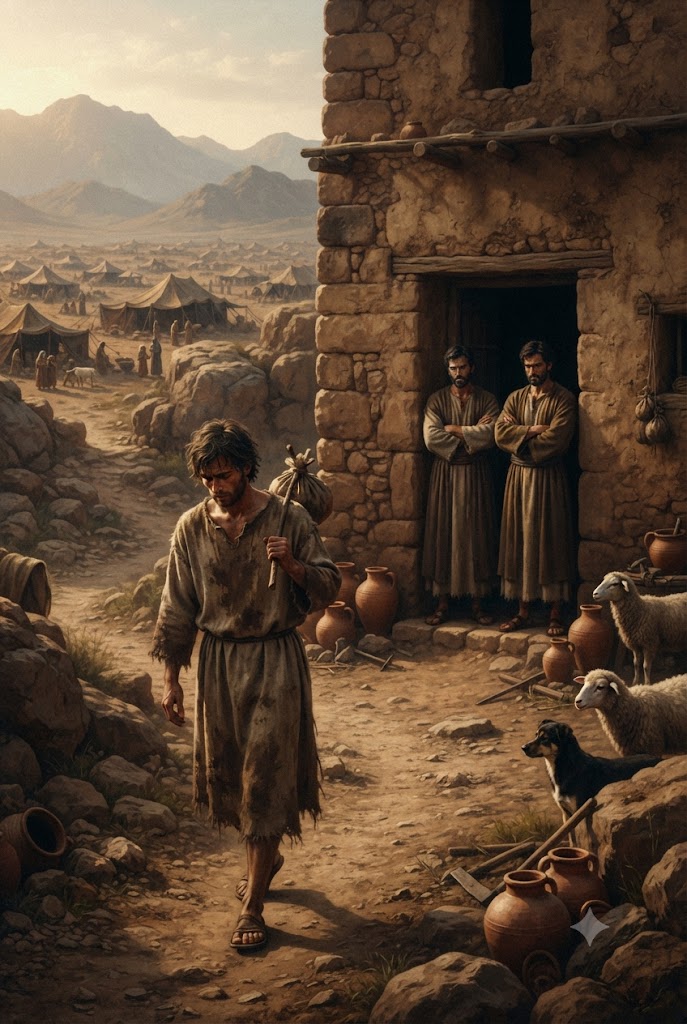
ACT ONE — A Cast-Out Son, Called Once Again (verses 1–11)
“Now Jephthah the Gileadite was a mighty man of valour, and he was the son of an harlot: and Gilead begat Jephthah… And Gilead’s wife bare him sons; and his wife’s sons grew up, and they thrust out Jephthah, and said unto him, Thou shalt not inherit in our father’s house; for thou art the son of a strange woman. Then Jephthah fled from his brethren, and dwelt in the land of Tob: and there were gathered vain men to Jephthah, and went out with him.”
The son of an harlot… thrust out. Jephthah bore social stigma from birth, and was violently excluded by his own brothers. He was ultimately left to live among people on the margins of society.
But when war with Ammon became imminent, the very same elders who had cast him out came seeking him again.
“And it was so, when the children of Ammon made war against Israel, that the elders of Gilead went to fetch Jephthah out of the land of Tob: And they said unto Jephthah, Come, and be our captain… And Jephthah said unto the elders of Gilead, Did not ye hate me, and expel me out of my father’s house? and why are ye come unto me now when ye are in distress?”
Why are ye come unto me now when ye are in distress? Jephthah’s response carried a legitimate pain — a pointed remark toward those who only came to him when they needed him. The elders firmly promised to make him leader, and Jephthah ultimately accepted the condition.
ACT TWO — Diplomatic Negotiation With the King of Ammon (verses 12–28)
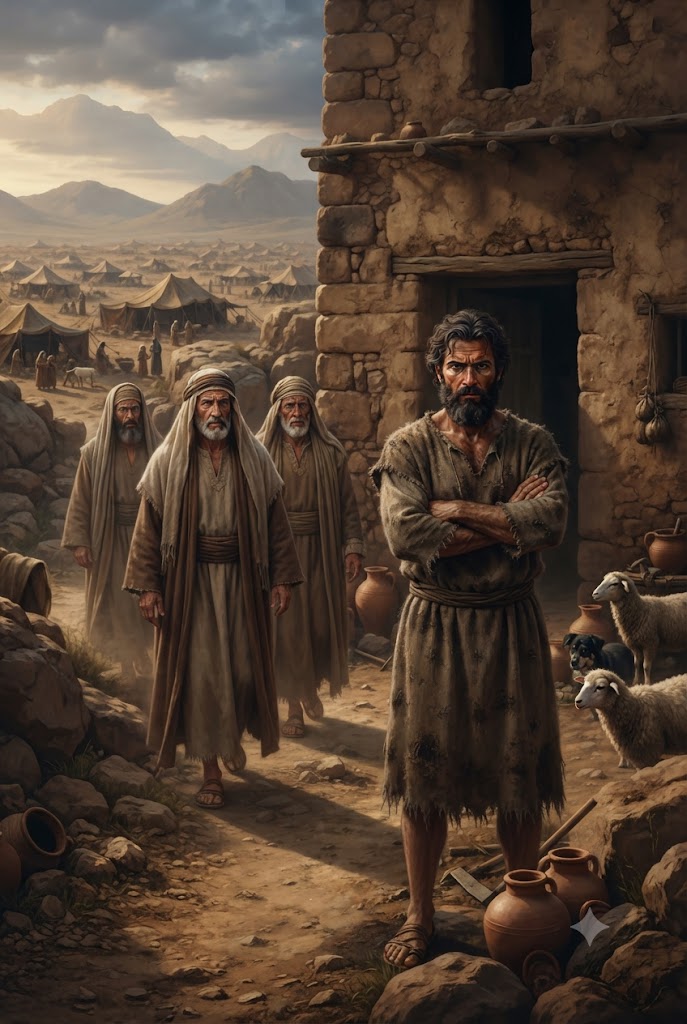
Rather than rushing into war, Jephthah first sent messengers to the king of Ammon, logically refuting the historical basis of the territorial dispute — that Israel had not taken Ammon’s land, but had rightfully acquired it from the Amorites long ago. This diplomatic attempt failed, but it shows Jephthah’s careful, reasoned leadership.
ACT THREE — The Hasty Vow (verses 29–31)
The most fateful moment of this chapter now appears.
“Then the Spirit of the LORD came upon Jephthah… And Jephthah vowed a vow unto the LORD, and said, If thou shalt without fail deliver the children of Ammon into mine hands, Then it shall be, that whatsoever cometh forth of the doors of my house to meet me… shall surely be the LORD’s, and I will offer it up for a burnt offering.”
Whatsoever cometh forth… shall be the LORD’s… I will offer it up. This vow was remarkably reckless — Jephthah made an unconditional promise without ever considering what might come out of his own door first.
ACT FOUR — The Daughter’s Appearance, and Its Horrific Consequence (verses 32–40)
Jephthah won a great victory over Ammon and returned home triumphant. But at that very moment, the most terrifying thing happened.
“And Jephthah came to Mizpeh unto his house, and, behold, his daughter came out to meet him with timbrels and with dances: and she was his only child; beside her he had neither son nor daughter. And it came to pass, when he saw her, that he rent his clothes, and said, Alas, my daughter! thou hast brought me very low.”
Alas, my daughter! Thou hast brought me very low. His vow ultimately fell upon his only child. His daughter, knowing her father’s vow, responded with remarkable boldness.
“And she said unto him, My father, if thou hast opened thy mouth unto the LORD, do to me according to that which hath proceeded out of thy mouth… And she said unto her father, Let this thing be done for me: let me alone two months, that I may go up and down upon the mountains, and bewail my virginity, I and my fellows.”
Do to me according to that which hath proceeded from thy mouth. Her response was closer to obedience than to fear — honoring her father’s vow, while requesting only a brief period of mourning.
The text closes the account of what followed with remarkably restrained, deliberately understated language.
“And it came to pass at the end of two months, that she returned unto her father, who did with her according to his vow which he had vowed: and she knew no man. And it was a custom in Israel, That the daughters of Israel went yearly to lament the daughter of Jephthah the Gileadite four days in a year.”
REFLECTION — The Weight of a Hasty Word, and the Discretion It Deserves
The heavy warning Judges 11 gives us is a vivid demonstration of how devastating the consequences can be from the principle already emphasized in Deuteronomy 23 — the absolute weight of a vow. Jephthah won by the Spirit of God’s power, yet at the same time brought upon himself an irreversible tragedy through one careless word.
In a moment of heightened emotion, do you speak only after careful thought, rather than hastily making absolute promises?
NEXT EPISODE PREVIEW
Judges Chapter 12 — the internal conflict with Ephraim, and the incident of “Shibboleth,” follow.
Tags: #Judges11 #JephthahsCalling #ACastOutSonBecomesLeader #DiplomaticDisputeWithAmmon #TheHastyVow #JephthahsDaughter #Judges #BibleDevotional #ChristianBlog #BibleStudy #OldTestament #Bible #Church #Devotion #Christianity #Deuteronomy23WeightOfAVow #TheWeightAndDiscretionOfWords #DailyDevotional