PROLOGUE — Internal Conflict Right After an External Victory
Judges 12, immediately after Jephthah’s victory over Ammon (chapter 11), records a far more tragic conflict — a civil war within Israel itself. This chapter closes with brief mentions of three minor judges — Ibzan, Elon, and Abdon — completing the stories of half of the twelve judges.
ACT ONE — Ephraim’s Challenge (verses 1–3)
“And the men of Ephraim gathered themselves together, and went northward, and said unto Jephthah, Wherefore passedst thou over to fight against the children of Ammon, and didst not call us to go with thee? we will burn thine house upon thee with fire.”
We will burn thine house upon thee. This was exactly the same complaint Gideon had faced in chapter 8 — that Ephraim had not been invited to battle. But unlike Gideon, who defused the situation through humble diplomacy, Jephthah reacted far more fiercely.
“And Jephthah said unto them, I and my people were at great strife with the children of Ammon; and when I called you, ye delivered me not out of their hands. And when I saw that ye delivered me not, I put my life in my hands, and passed over against the children of Ammon, and the LORD delivered them into my hand: wherefore then are ye come up unto me this day, to fight against me?”
ACT TWO — Tragic Battle at the Fords of the Jordan (verses 4–6)
Negotiation failed, and the situation escalated into a horrific civil war.
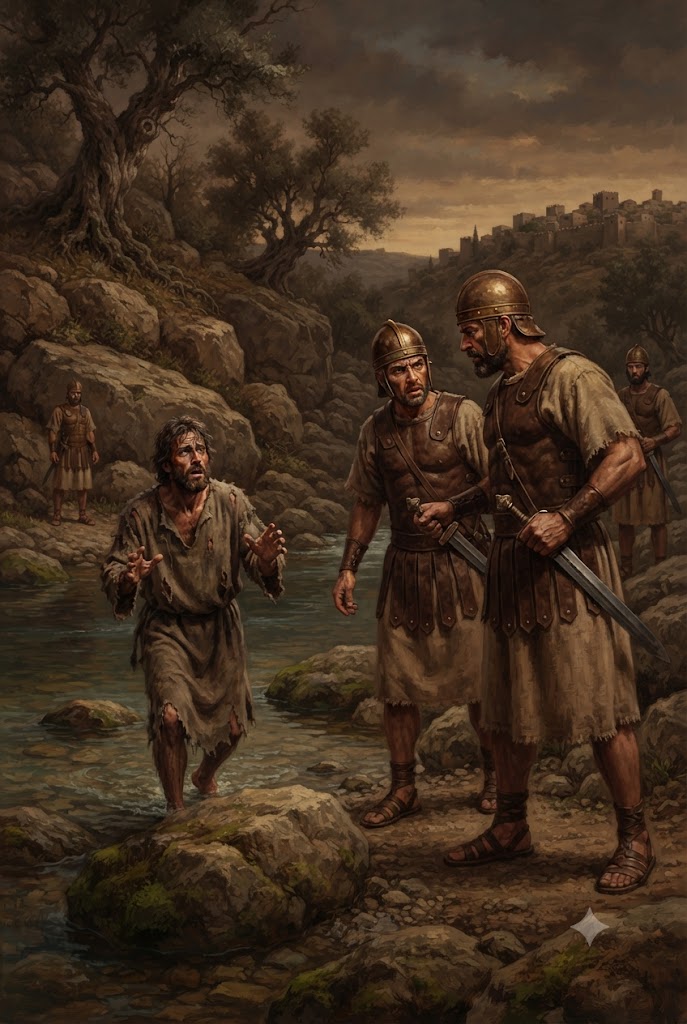
“Then Jephthah gathered together all the men of Gilead, and fought with Ephraim: and the men of Gilead smote Ephraim, because they said, Ye Gileadites are fugitives of Ephraim among the Ephraimites, and among the Manassites. And the Gileadites took the passages of Jordan before the Ephraimites: and it was so, that when those Ephraimites which were escaped said, Let me go over; that the men of Gilead said unto him, Art thou an Ephraimite? If he said, Nay; Then said they unto him, Say now Shibboleth: and he said Sibboleth: for he could not frame to pronounce it right. Then they took him, and slew him at the passages of Jordan.”
Shibboleth… Sibboleth. This is the most famous instance of dialect identification in all of Scripture — the Ephraimites had difficulty pronouncing a specific consonant sound (“sh”), and the Gileadites used this subtle pronunciation difference as a life-or-death checkpoint. The word “shibboleth” is still used today as a term for a linguistic or cultural marker distinguishing group belonging.
“And there fell at that time of the Ephraimites forty and two thousand.”
Forty-two thousand fell. This number is shocking — far more lives were lost in this civil war between brother tribes than in the war against the external enemy, Ammon. This starkly illustrates the downward trajectory that runs through the entirety of Judges — that internal division destroys Israel far more severely than external threats.
ACT THREE — The Death of Jephthah (verse 7)
“And Jephthah judged Israel six years. Then died Jephthah the Gileadite, and was buried in one of the cities of Gilead.”
His rule, marred by a tragic vow and a horrific civil war, closes with a brief, understated notice.
ACT FOUR — Three Minor Judges (verses 8–15)
The rest of this chapter continues with remarkably brief records of Ibzan, Elon, and Abdon.
“And after him Ibzan of Bethlehem judged Israel. And he had thirty sons, and thirty daughters… And after him Elon, a Zebulonite, judged Israel… And after him Abdon the son of Hillel, a Pirathonite, judged Israel. And he had forty sons and thirty nephews, that rode on threescore and ten ass colts.”
Each of these three judges led Israel for a short term, ruling quietly and passing on without any notable battle or dramatic event.
REFLECTION — When Internal Division Is More Dangerous Than External Threat
The heaviest warning Judges 12 gives us is that conflict born of pride and misunderstanding among brothers can carry far greater destructive power than an external enemy. The Shibboleth incident shows how a seemingly trivial dialectal difference could escalate into a tragedy claiming 42,000 lives.
Within your own community, do you prioritize humility and dialogue, so that small differences or misunderstandings do not escalate into destructive division?
NEXT EPISODE PREVIEW
Judges Chapter 13 — the miraculous birth story of the final and most famous judge, Samson, begins.
Tags: #Judges12 #EphraimsChallenge #ShibbolethIncident #CivilWarBetweenBrothers #DeathOfJephthah #ThreeMinorJudges #Judges #BibleDevotional #ChristianBlog #BibleStudy #OldTestament #Bible #Church #Devotion #Christianity #DangerOfInternalDivision #LanguageAsMarkerOfIdentity #DailyDevotional