PROLOGUE — The Beginning of Covenant Renewal
Deuteronomy 27 opens the covenant renewal section (chapters 27–30). The proclamation of blessing and curse at Mount Gerizim and Mount Ebal, already foretold in chapter 11, is now given with concrete implementation instructions.
ACT ONE — Inscribe the Law Upon Stones (verses 1–10)
“And it shall be on the day when ye shall pass over Jordan unto the land which the LORD thy God giveth thee, that thou shalt set thee up great stones, and plaister them with plaister: And thou shalt write upon them all the words of this law… And it shall be when ye be gone over Jordan, that ye shall set up these stones, which I command you this day, in mount Ebal, and thou shalt plaister them with plaister.”
Set up great stones… and inscribe. This was a measure to leave the covenant as a physical, permanent monument — never to be transmitted only orally, but preserved in a form future generations could actually see, engraved upon stone.
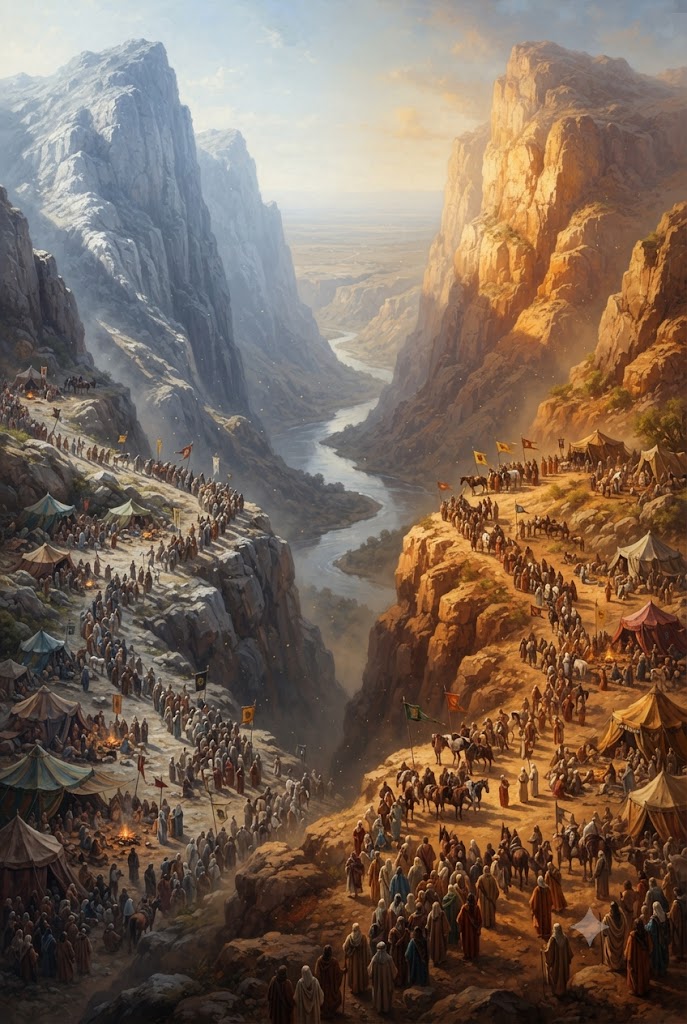
Interestingly, upon Mount Ebal — the very mountain where curses would soon be pronounced — a command is nevertheless given to offer peace offerings and rejoice.
“And thou shalt offer peace offerings, and shalt eat there, and rejoice before the LORD thy God.”
ACT TWO — Two Mountains, the Stage of Blessing and Curse (verses 11–13)
“And Moses charged the people the same day, saying, These shall stand upon mount Gerizim to bless the people, when ye are come over Jordan; Simeon, and Levi, and Judah, and Issachar, and Joseph, and Benjamin: And these shall stand upon mount Ebal to curse; Reuben, Gad, and Asher, and Zebulun, Dan, and Naphtali.”
Six tribes upon Gerizim… six tribes upon Ebal. The very topographical structure of the two mountains facing each other visually embodied the choice all of Israel had to face — blessing and curse, obedience and disobedience.
ACT THREE — The Recitation of Twelve Curses (verses 14–26)
Twelve curses to be recited aloud by the Levites are listed — idolatry, dishonoring one’s parents, moving a neighbor’s boundary marker, misleading a blind person, denying justice to the stranger, orphan, and widow, various forms of incest, secretly murdering a neighbor, taking a bribe to kill the innocent, and more.
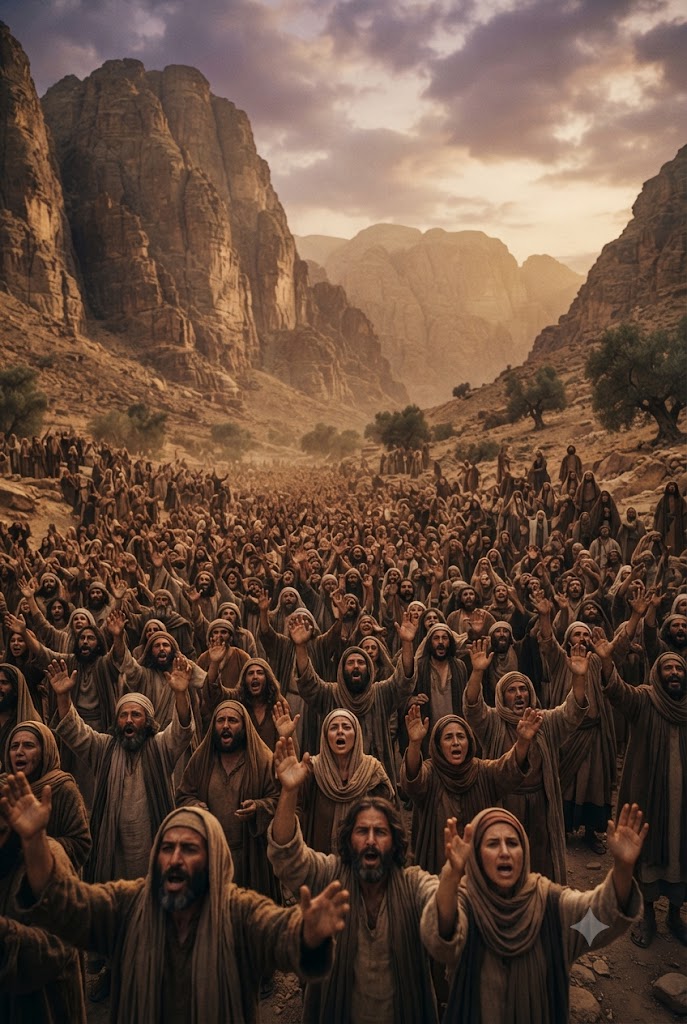
After each curse, the same response is repeated.
“And all the people shall say, Amen.”
And all the people shall say, Amen. This repeated congregational response carries remarkable force — each individual agreed to this list of curses, publicly acknowledging that they themselves stood under this standard. Interestingly, most of the sins on this curse list are committed secretly (in darkness, in hiding) — sins difficult for a human judicial system to detect. There is a theological implication here: God’s curse fills that very gap.
REFLECTION — The Power of Publicly Agreed Moral Standards
What Deuteronomy 27 teaches us is the power of publicly, collectively agreed moral standards. Crying “Amen” was never a mere formality — it was an act by which each person honestly placed themselves before that standard.
Do you honestly place yourself before God’s moral standard — especially the standard for sins committed secretly?
NEXT EPISODE PREVIEW
Deuteronomy Chapter 28 — the blessing of obedience and the curse of disobedience unfold in far greater detail and scope.
Tags: #Deuteronomy27 #InscribeTheLawUponStones #MountGerizimAndMountEbal #TheTwelveCurses #AllThePeopleShallSayAmen #WarningAgainstSecretSins #Deuteronomy #BibleDevotional #ChristianBlog #BibleStudy #OldTestament #Bible #Church #Devotion #Christianity #PowerOfPublicAgreement #BeginningOfCovenantRenewal #DailyDevotional