PROLOGUE — The Rhythm of Worship Emphasized Again at the Threshold of the Promised Land
Numbers 28 once more lays out in detail, for Israel standing at the threshold of the promised land, the rhythm of worship they were required to keep. As a new generation prepared to live in a new land, these regulations would become the framework orienting their daily life around God.
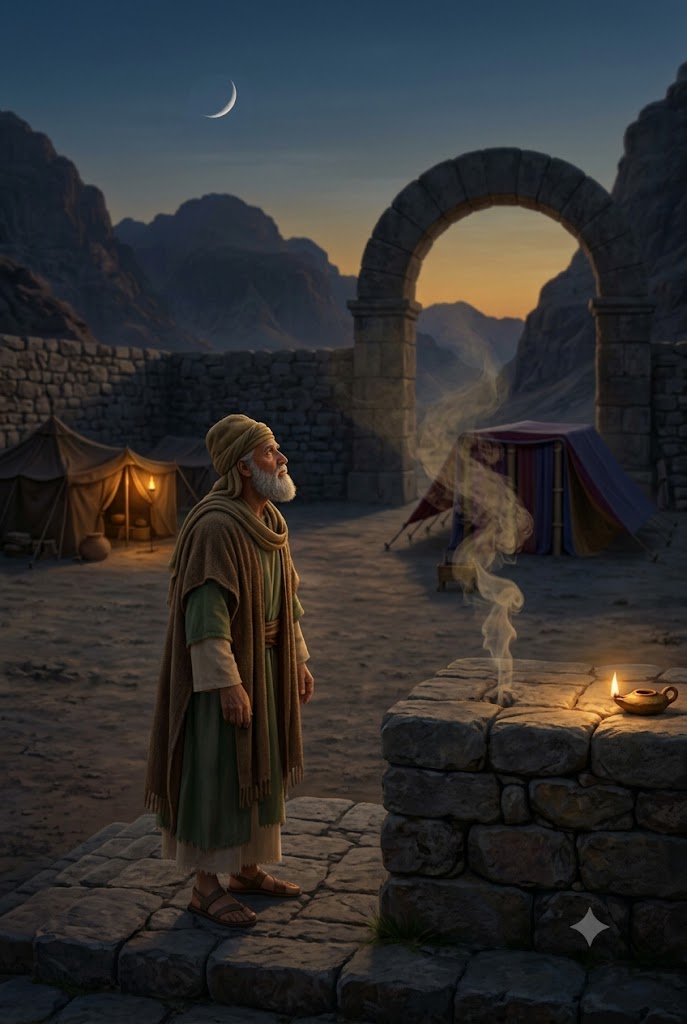
ACT ONE — The Daily Continual Burnt Offering (verses 1–8)
“This is the offering made by fire which ye shall offer unto the LORD; two lambs of the first year without spot day by day, for a continual burnt offering. The one lamb shalt thou offer in the morning, and the other lamb shalt thou offer at even.”
One in the morning, one in the evening. Israel’s day literally began and ended with sacrifice. This symbolized that both the first and last moments of the day were dedicated to God — the entirety of a human day held within the rhythm of worship.
ACT TWO — The Weekly Sabbath, and the Monthly New Moon (verses 9–15)
“And on the sabbath day two lambs of the first year without spot… And in the beginnings of your months ye shall offer a burnt offering unto the LORD; two young bullocks, and one ram, seven lambs of the first year without spot.”
Weekly, monthly. Onto the daily rhythm, a larger rhythm of the week (Sabbath) and the month (new moon) was layered. Time itself was woven into multiple layers of worship structure — day, week, month, and (as already addressed in Leviticus 23) the appointed feasts. Israel’s life rested within a continually repeating pattern of worship.
ACT THREE — The Special Offerings of Passover and Firstfruits (verses 16–31)
The remainder of this chapter once again specifies, in detail, the specific types and quantities of offerings to be brought at the major feasts already introduced in Leviticus 23 — Passover, Unleavened Bread, and Firstfruits.
“In the fourteenth day of the first month is the passover of the LORD. And in the fifteenth day of this month is the feast: seven days shall unleavened bread be eaten… And ye shall offer a burnt offering, a sacrifice made by fire… two young bullocks, and one ram, and seven lambs of the first year: they shall be unto you without blemish.”
Repeated in detail. What is interesting is that, despite these regulations having already been addressed in Leviticus, they are repeated once again in Numbers, with even more specific offering quantities. This was never unnecessary repetition — at this point of a new generation, a new beginning, God wanted to imprint the basic framework of worship clearly once more.
REFLECTION — The Stability Built Through Repetition
What Numbers 28 teaches us is that stability of faith is built not only in dramatic moments, but in a repeated rhythm. The daily continual offering, the weekly Sabbath, the monthly new moon — this repetitive pattern may seem tedious, but it was precisely that repetition which formed the stable framework orienting all of life toward God.
Does your own life hold a rhythm with God repeated daily and weekly, not only in dramatic moments?
NEXT EPISODE PREVIEW
Numbers Chapter 29 — the regulations for offerings to be brought at the Feast of Trumpets, the Day of Atonement, and the Feast of Tabernacles follow, completing the autumn feasts.
Tags: #Numbers28 #ContinualBurntOffering #OneInMorningOneInEvening #SabbathAndNewMoon #PassoverOfferingRegulations #RepeatedRhythmOfWorship #Numbers #BibleDevotional #ChristianBlog #BibleStudy #OldTestament #Bible #Church #Devotion #Christianity #FaithThatOrdersDailyLife #StabilityThroughRepetition #DailyDevotional