PROLOGUE — Constancy and Violation, Two Stories
Leviticus 24 unfolds in two parts. The first half addresses the holy rites that must continue without interruption within the sanctuary — the lamp and the bread of the Presence. The second half suddenly shifts into narrative, recording an actual incident of a man blaspheming God’s name and the judgment that followed.
ACT ONE — The Lamp That Never Goes Out (verses 1–4)
“Command the children of Israel, that they bring unto thee pure oil olive beaten for the light, to cause the lamps to burn continually… Aaron shall order it from the evening unto the morning before the LORD continually: it shall be a statute for ever in your generations.”
Continually, from evening to morning. The lamp of the sanctuary was never to be extinguished. This was a symbolic declaration that Israel’s worship never slept — God’s presence remained with them through both day and night.
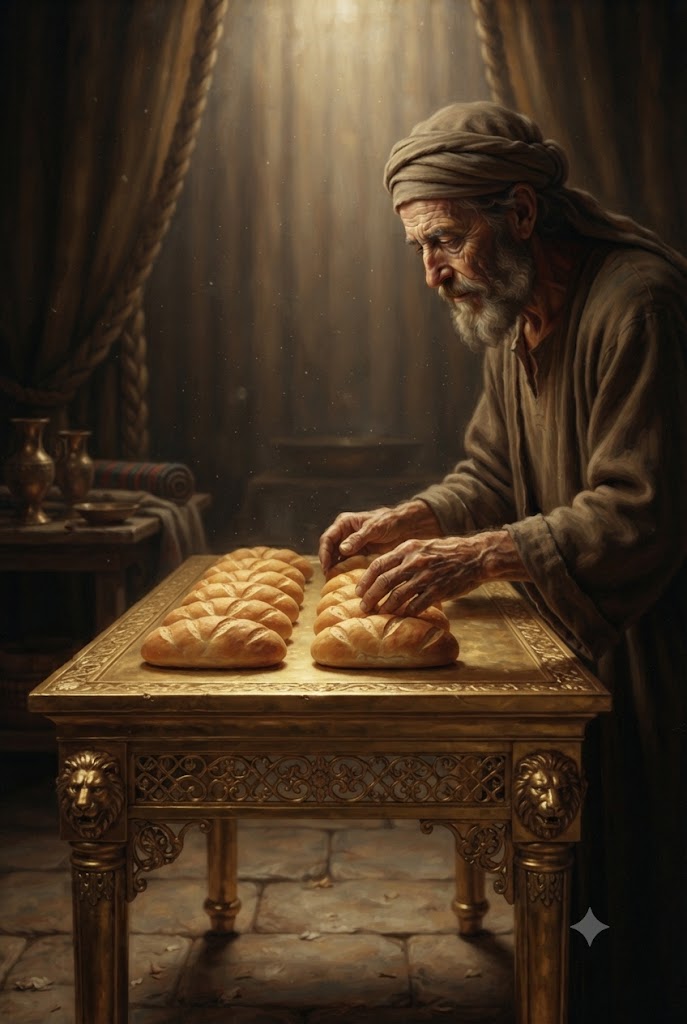
ACT TWO — The Bread of the Presence, Always Set (verses 5–9)
“Thou shalt take fine flour, and bake twelve cakes thereof… And thou shalt set them in two rows, six on a row, upon the pure table before the LORD… It shall be a perpetual covenant.”
Twelve cakes. They symbolized the twelve tribes of Israel. Replaced with fresh bread every Sabbath, they represented the whole people symbolically remaining always before God’s table. This very bread was what David ate while fleeing from Saul (1 Samuel 21), and Jesus cited that same incident to teach the true meaning of the Sabbath (Matthew 12).
ACT THREE — The Incident of Blasphemy (verses 10–16)
The text abruptly shifts into a specific incident.
“And the son of an Israelitish woman, whose father was an Egyptian, went out among the children of Israel… And the Israelitish woman’s son blasphemed the name of the LORD, and cursed… and they put him in ward, that the mind of the LORD might be shewed them.”
They put him in ward, that the mind of the LORD might be shewed them. Even in a situation that seemed clear-cut, Moses did not render an improvised verdict. He waited for God’s direct instruction — a striking picture of a leader’s humility and procedural care.
God’s answer was unambiguous.
“He that blasphemeth the name of the LORD, he shall surely be put to death, and all the congregation shall certainly stone him: as well the stranger, as he that is born in the land, when he blasphemeth the name of the LORD, shall be put to death.”
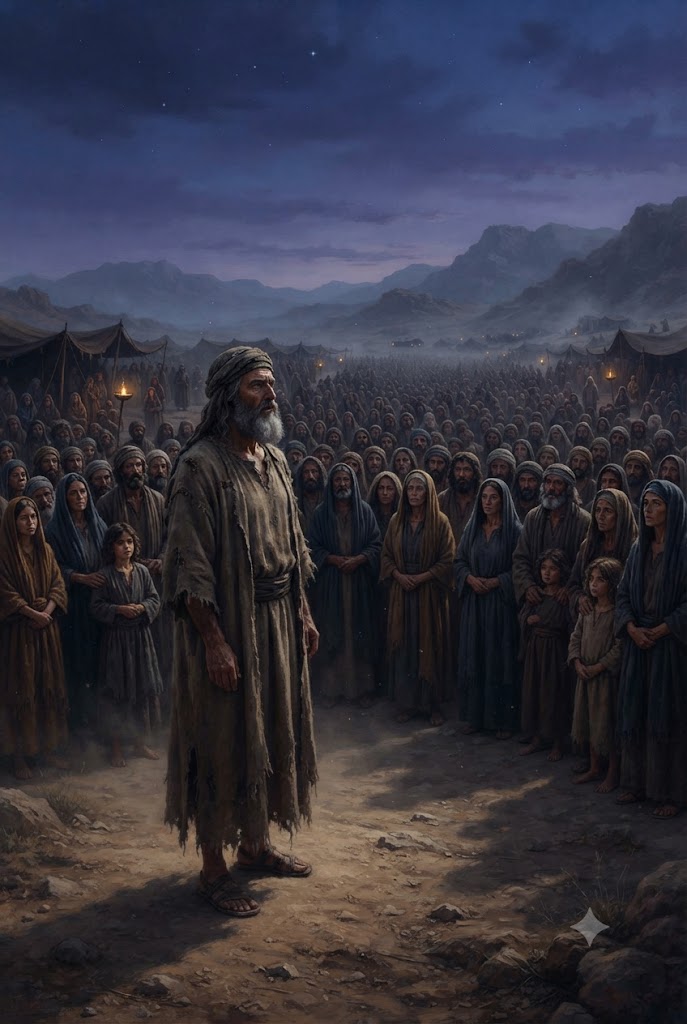
ACT FOUR — Eye for Eye, Tooth for Tooth (verses 17–22)
“And he that killeth any man shall surely be put to death… Breach for breach, eye for eye, tooth for tooth: as he hath caused a blemish in a man, so shall it be done to him again… Ye shall have one manner of law, as well for the stranger, as for one of your own country.”
Ye shall have one manner of law, as well for the stranger. This principle, often misread as brutal retaliation, was actually a standard of justice limiting punishment from exceeding the weight of the crime. And this law applied equally to Israelite and foreigner alike — a strikingly rare instance of equality before the law in the ancient world.
REFLECTION — Constancy, Holiness, and Justice
Leviticus 24 may appear to be three unrelated stories. But a single principle runs through its center — God reveals His character through constancy (the unquenched lamp), relationship (the bread of the Presence), and justice (an impartial law). And His name can never be treated lightly.
In your own life, does God’s presence remain constant, like a lamp that never goes out, day and night?
NEXT EPISODE PREVIEW
Leviticus Chapter 25 — the regulations for the Sabbath year and the Year of Jubilee unfold, a year of freedom and restoration given to both land and people.
Tags: #Leviticus24 #LampThatNeverGoesOut #BreadOfThePresence #IncidentOfBlasphemy #EyeForEyeToothForTooth #EqualityBeforeTheLaw #Leviticus #BibleDevotional #ChristianBlog #BibleStudy #OldTestament #Bible #Church #Devotion #Christianity #1Samuel21 #Matthew12 #DailyDevotional