Leviticus Series — Episode 11
🍽️ Prologue — Holiness Comes Down to the Dinner Table
After the tragedy of Nadab and Abihu, God commanded the people to distinguish between holy and unholy.
Leviticus 11 brings that principle of discernment into the most specific area of daily life—what to eat. This chapter may look, at first, like a simple set of dietary regulations, but it is in fact a significant chapter shaping the entirety of Israel’s identity. Israel had to remember, bodily, at every meal, that they were a holy people set apart from other nations.
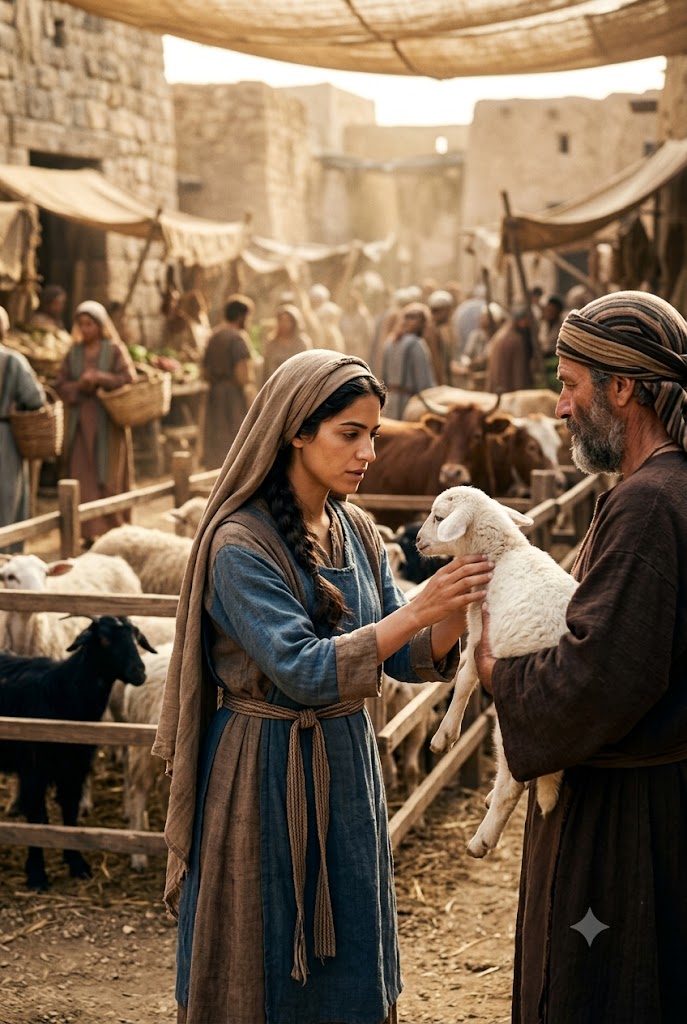
🐄 Act One — Land Animals, Chewing the Cud and the Split Hoof (Verses 1–8)
“Among all the animals which are on the earth, these you may eat: Among the animals, whatever divides the hoof, having cloven hooves and chewing the cud—that you may eat.”
Divides the hoof, and chews the cud. Both conditions had to be met together. Cattle, sheep, goats, and deer fell into this category.
But cases meeting only one condition were explicitly forbidden.
“The camel, because it chews the cud but does not have cloven hooves, is unclean to you… the swine, though it divides the hoof, having cloven hooves, yet does not chew the cud, is unclean to you.”
This specific mention of swine later becomes one of the most well-known dietary prohibitions in Jewish identity. But the text’s logic was not arbitrary—a consistent principle requiring both conditions was applied throughout.
🐟 Act Two — Creatures of the Water and Birds of the Air (Verses 9–23)
The regulation concerning water creatures also had a clear standard.
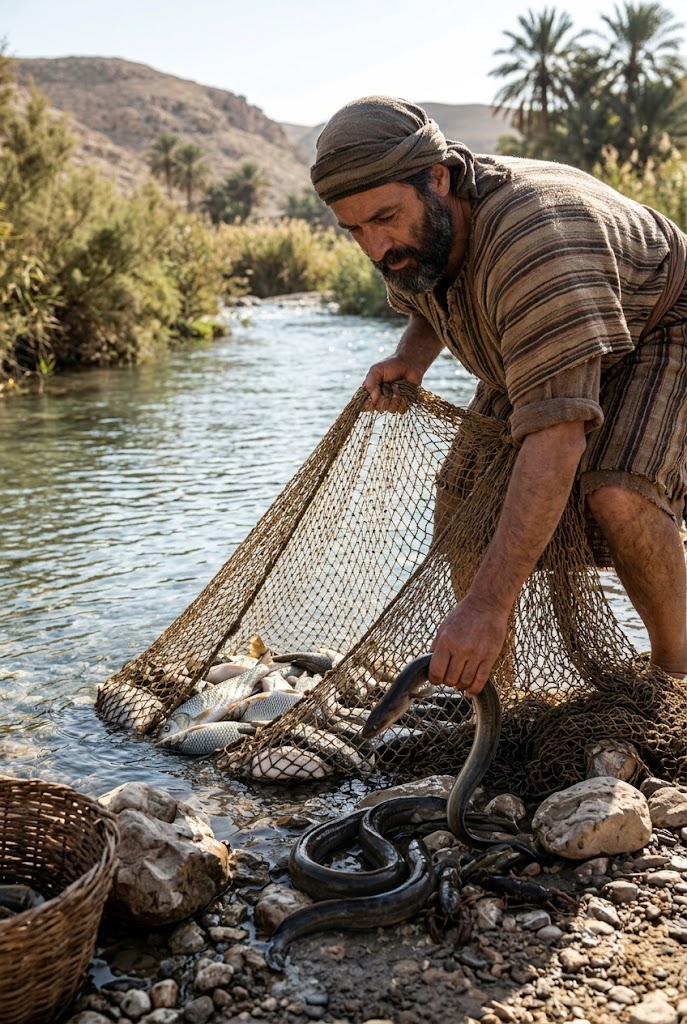
“These you may eat of all that are in the water: whatever in the water has fins and scales, whether in the seas or in the rivers—that you may eat.”
Fins and scales. Fish possessing both these features were considered clean. But those lacking these features—what we today know as shellfish, crustaceans, eels, and the like—were excluded.
For birds, a specific list is given rather than a defining characteristic.
“And these you shall regard as an abomination among the birds; they shall not be eaten, they are an abomination: the eagle, the vulture, the buzzard… the little owl, the sea gull, and the hawk after its kind.”
Predatory birds of prey, scavengers, and nocturnal birds were largely included on this list.
And an interesting exception concerning insects appears.
“All flying insects that creep on all fours shall be an abomination to you. Yet these you may eat of every flying insect that creeps on all fours: those which have jointed legs above their feet with which to leap on the earth. These you may eat: the locust after its kind, the destroying locust after its kind, the cricket after its kind, and the grasshopper after its kind.”
This becomes the background for understanding the New Testament record that John the Baptist ate locusts in the wilderness (Matthew 3:4).
🖐️ Act Three — Contact with Carcasses, and the Transfer of Uncleanness (Verses 24–47)
The latter half of this chapter turns to regulations concerning contact with the carcasses of these animals.
“By these you shall become unclean; whoever touches the carcass of any of them shall be unclean until evening.”
Unclean until evening. This uncleanness was not permanent, but temporary. After a day had passed, one could be restored to a clean state.
Regulations concerning creeping things follow in similar detail.
“Every swarming thing that swarms on the earth shall not be eaten, whether it crawls on its belly, or walks on all fours, or has many feet among all creeping things that creep on the earth—for they are an abomination.”
And the fundamental reason behind all these regulations is declared clearly at the close of this chapter.
“For I am the LORD your God. You shall therefore consecrate yourselves, and you shall be holy; for I am holy… You shall be holy, for I am holy.”
For I am holy, and so you shall be holy. This was the ultimate basis for all these dietary regulations. The point was never merely what to eat and what not to eat, but a calling to become a people reflecting God’s own holiness.
🕊️ Reflection — Identity Inscribed at Every Meal
The deepest truth in Leviticus 11 is this: God did not demand from Israel only grand theological declarations, but had them remember their identity bodily, three times a day, at the table. In that ordinary moment of choosing what to eat, they had to remember, again and again, that they were a people set apart.
This gives us an important insight. Holiness is never practiced only within a sanctuary. It must permeate our most ordinary daily life—what we eat, what we choose, how we spend our time.
And this calling—”for I am holy, so you shall be holy.” This is quoted again in the New Testament, in 1 Peter 1:16, showing that it is a timeless principle. The concrete form of holiness may change, but its underlying principle—a life reflecting God’s character—never changes.
Does a calling toward holiness also permeate the most ordinary choices of your daily life?
📣 Coming Up Next
Leviticus Chapter 12 — Regulations for purification following childbirth follow. God’s careful order, applied even in the most joyful moment of new life, unfolds in the next episode.
Tags: #Leviticus11 #CleanAndUncleanFood #ClovenHoofAndChewingTheCud #FinsAndScales #BirdsToBeAbhorred #LocustsAfterTheirKind #IAmHolySoYouShallBeHoly #Leviticus #BibleStudy #ChristianBlog #OldTestament #Scripture #Church #DailyDevotional #BiblicalFaith #GodsWord