PROLOGUE — Three Regulations of Protection and Justice
Deuteronomy 19 reaffirms the city-of-refuge system already addressed in Numbers 35, now within the new context of settling Canaan, and then expands into the prohibition of moving a neighbor’s boundary marker, and the severe penalty for false testimony.

ACT ONE — Cities of Refuge, a Place for the Accidental Manslayer (verses 1–13)
“Thou shalt separate three cities for thee in the midst of thy land, which the LORD thy God giveth thee to possess it… that the slayer may flee thither, which killeth his neighbour unawares, and hated him not in time past; and that fleeing unto one of these cities he may live.”
Unawares, and hated him not in time past. The core of this regulation was, once again, clearly distinguishing intentional murder from an accidental act. Interestingly, Moses foretells that if Israel’s territory expands, three additional cities of refuge would need to be added — the size of the land and accessibility of justice had to be considered together.
But this protection never applied to an intentional murderer.
“But if any man hate his neighbour, and lie in wait for him, and rise up against him, and smite him mortally that he die, and fleeth into one of these cities: Then the elders of his city shall send and fetch him thence, and deliver him into the hand of the avenger of blood, that he may die: Thine eye shall not pity him, but thou shalt put away the guilt of innocent blood from Israel, that it may go well with thee.”
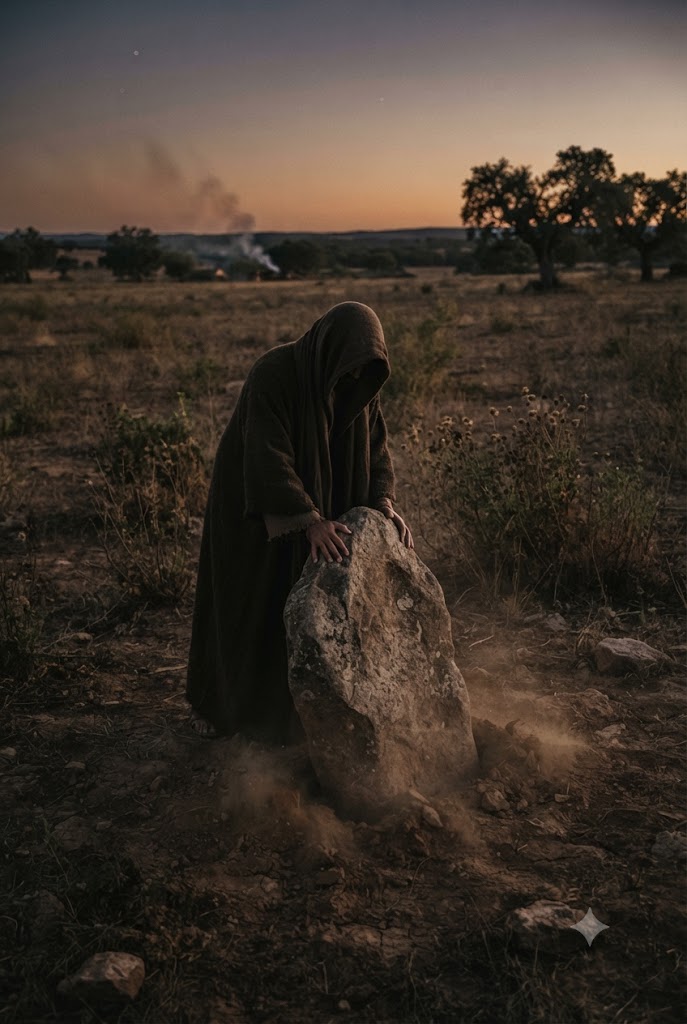
ACT TWO — Do Not Remove Your Neighbor’s Boundary Marker (verse 14)
A brief yet profound principle follows.
“Thou shalt not remove thy neighbour’s landmark, which they of old time have set in thine inheritance, which thou shalt inherit in the land that the LORD thy God giveth thee to possess it.”
Thou shalt not remove the boundary marker set by those of old. This goes beyond simple property protection. Secretly moving a boundary marker was a quiet, gradually executed form of theft — an injustice no less real for being nonviolent, but arguably more cunning for it. This principle recurs in Proverbs 22:28 and 23:10, and runs throughout Scripture as a vigilance against quietly perpetrated economic injustice.
ACT THREE — The False Witness, and the Principle of Reciprocal Punishment (verses 15–21)
This chapter closes with a core principle of judicial justice.
“One witness shall not rise up against a man for any iniquity, or for any sin, in any sin that he sinneth: at the mouth of two witnesses, or at the mouth of three witnesses, shall the matter be established.”
This repeats the principle already established in chapter 17. But this chapter goes much further, specifying a punishment procedure for the false witness themselves.
“If a false witness rise up against any man to testify against him that which is wrong; Then both the men, between whom the controversy is, shall stand before the LORD, before the priests and the judges, which shall be in those days; And the judges shall make diligent inquisition: and, behold, if the witness be a false witness, and hath testified falsely against his brother; Then shall ye do unto him, as he had thought to have done unto his brother: so shalt thou put the evil away from among you.”
Then shall ye do unto him, as he had thought to have done unto his brother. This principle — returning to the false witness the very punishment he sought to inflict on another — dramatically demonstrates the balance of justice. And this chapter reaffirms once more the famous “eye for eye” principle.
“And thine eye shall not pity; but life shall go for life, eye for eye, tooth for tooth, hand for hand, foot for foot.”
REFLECTION — A Community Protected From Quiet Injustice
What Deuteronomy 19 teaches us is that justice must be protected not only from violent, obvious crime, but also from quiet, hidden forms of injustice — secretly moving a boundary marker, false testimony. God gave as careful attention to unseen dishonesty as He did to visible sin.
Do you hold to honesty not only against clear wrongdoing, but also against the small dishonesties that could be committed quietly?
NEXT EPISODE PREVIEW
Deuteronomy Chapter 20 — the regulations of warfare, exemptions for the fearful, and principles for treating cities, follow.
Tags: #Deuteronomy19 #CitiesOfRefugeReaffirmed #DoNotRemoveTheBoundaryMarker #PunishmentOfAFalseWitness #AsHeThoughtToHaveDone #EyeForEyeToothForTooth #Deuteronomy #BibleDevotional #ChristianBlog #BibleStudy #OldTestament #Bible #Church #Devotion #Christianity #Proverbs22 #ProtectionFromQuietInjustice #DailyDevotional