PROLOGUE — First Words to a New Generation
Deuteronomy begins on the plains of Moab. With the forty-year wilderness journey nearly complete, Moses now stands before a new generation — the children of the first generation, those who would actually enter Canaan — to deliver his final sermon. This book’s opening chapter begins with a historical retrospective, retracing how they came to stand here.
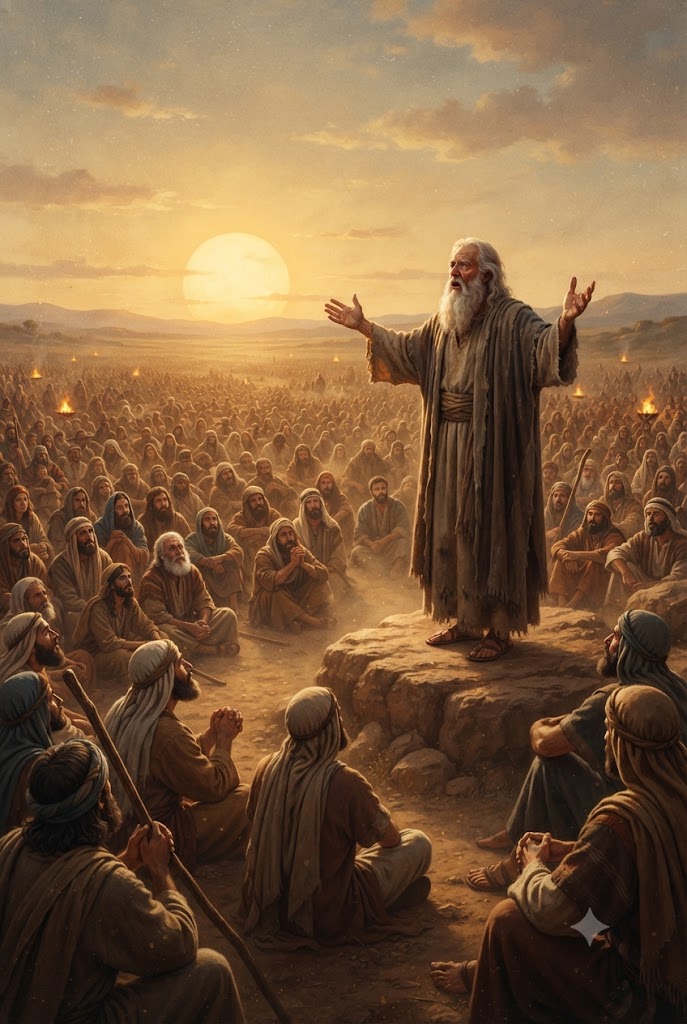
ACT ONE — The First Command Given at Horeb (verses 1–8)
“The LORD our God spake unto us in Horeb, saying, Ye have dwelt long enough in this mount: Turn you, and take your journey… go in and possess the land which the LORD sware unto your fathers, Abraham, Isaac, and Jacob, to give unto them and to their seed after them.”
Ye have dwelt long enough in this mount. God’s command was clear — remaining at Sinai (Horeb) was never the goal, only a season of preparation. Israel had to keep moving. What was required of them was never a stagnant faith, but forward movement toward the promise.
ACT TWO — Judges Are Appointed (verses 9–18)
Moses recalls a burden he once carried.
“And I spake unto you at that time, saying, I am not able to bear you myself alone: The LORD your God hath multiplied you, and, behold, ye are this day as the stars of heaven for multitude… Take you wise men, and understanding, and known among your tribes, and I will make them rulers over you.”
I am not able to bear you myself alone. Moses reminds this new generation of an event already recorded in Numbers 11. Leadership was never meant to be one person’s burden alone — sharing it with those possessing wisdom and reputation was God’s own design.
Moses also recalled the principle of judgment.
“For the judgment is God’s: and the cause that is too hard for you, bring it unto me, and I will hear it… Ye shall not respect persons in judgment; but ye shall hear the small as well as the great.”
ACT THREE — Kadesh-barnea, the Memory of the Spies and Rebellion (verses 19–33)
Moses now retraces the heaviest memory in this entire book — the events of Numbers 13–14.
“And when we departed from Horeb, we went through all that great and terrible wilderness… till we came to Kadeshbarnea. And I said unto you, Ye are come unto the mountain of the Amorites… Behold, the LORD thy God hath set the land before thee: go up and possess it… fear not, neither be discouraged.”
Fear not, neither be discouraged. Moses recalls his clear encouragement at that time. But what happened next was devastating.
“And ye came near unto me every one of you, and said, We will send men before us, and they shall search us out the land… But ye would not go up, but rebelled against the commandment of the LORD your God: And ye murmured in your tents, and said, Because the LORD hated us, he hath brought us forth out of the land of Egypt, to deliver us into the hand of the Amorites, to destroy us.”
Because the LORD hated us. The new generation now hears, plainly and directly, the extreme unbelief their parents’ generation once committed. Moses did not conceal or soften this failure — instead, he retraced it honestly and in detail.
And Moses reminds them of God’s faithfulness alongside it.
“And in the wilderness, where thou hast seen how that the LORD thy God bare thee, as a man doth bear his son, in all the way that ye went, until ye came into this place. Yet in this thing ye did not believe the LORD your God.”
ACT FOUR — The Failure of a Belated Attack (verses 34–46)
Moses recounts in detail both the pronouncement of judgment and the people’s reckless, foolish response that followed.
“Then ye answered and said unto me, We have sinned against the LORD, we will go up and fight, according to all that the LORD our God commanded us… The LORD is not among you; fall not before your enemies. So I spake unto you; and ye would not hear, but rebelled against the commandment of the LORD, and presumptuously went up into the hill.”
Rebelled against the commandment of the LORD, and presumptuously went up. The first act of disobedience (refusing to enter) and the later act of disobedience (entering without command) stand side by side. In both cases, the core problem was the same — failing to follow God’s word. The direction was opposite, but the essence of disobedience was identical.
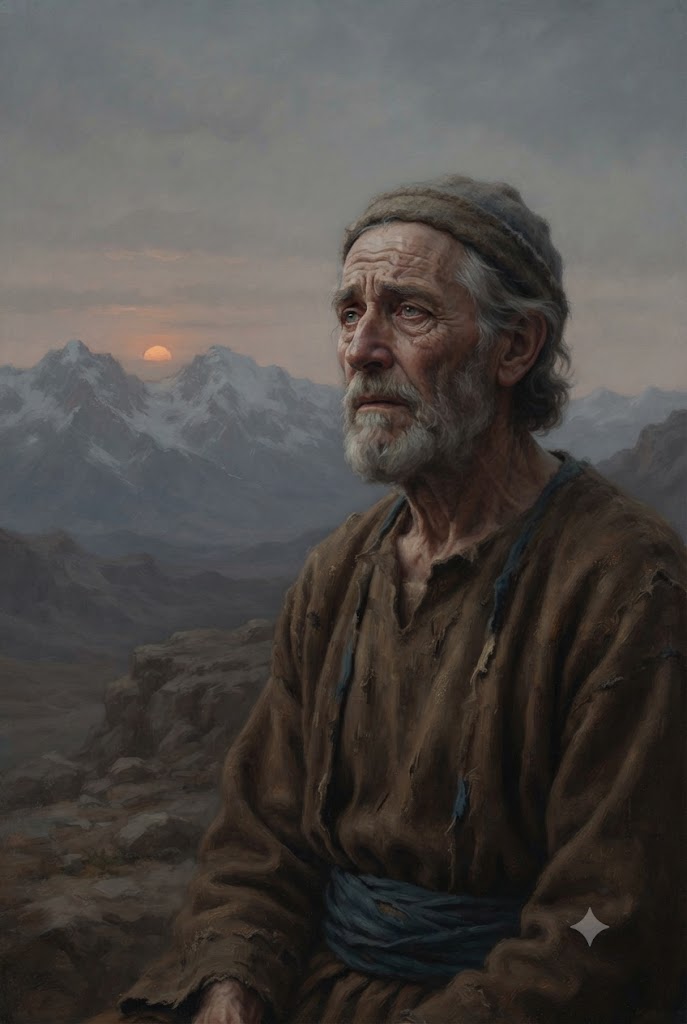
REFLECTION — The Wisdom Found in Honest History
The most important gift Deuteronomy 1 gives to this new generation is honest history. Moses did not hide his parents’ generation’s failure. Instead, by relaying it in full, accurate detail, he prepared the next generation not to repeat the same mistake.
Rather than concealing your own history of past failure, do you face it honestly and pass it on as wisdom to the next generation — or to your future self?
NEXT EPISODE PREVIEW
Deuteronomy Chapter 2 — God’s meticulous guidance of Israel as they pass through Edom, Moab, and Ammon follows.
Tags: #Deuteronomy1 #SermonOnThePlainsOfMoab #DepartFromHorebMountain #AppointingJudges #MemoryOfKadeshBarnea #BecauseTheLordHatedUs #Deuteronomy #BibleDevotional #ChristianBlog #BibleStudy #OldTestament #Bible #Church #Devotion #Christianity #WisdomOfHonestHistory #TwoFormsOfDisobedience #DailyDevotional