Exodus Series — Episode 20
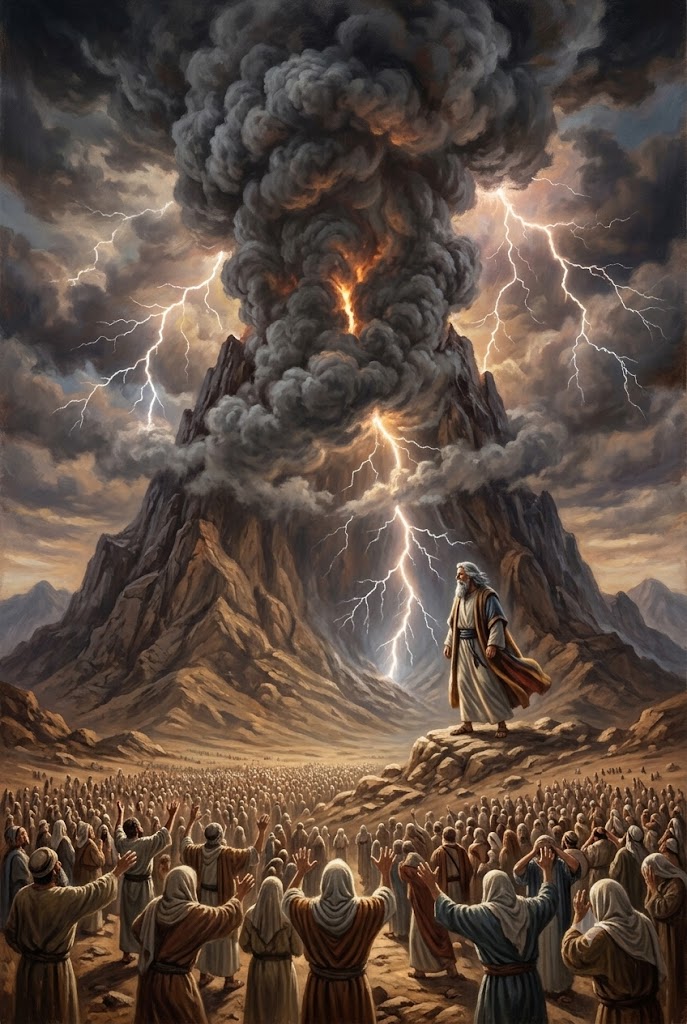
🔥 Prologue — A Framework for Life, Given to a Freed People The people, carried in on eagles’ wings, now stood at the foot of the mountain.
Amid thunder, lightning, and thick smoke, they trembled. And in the midst of that overwhelming presence, God speaks directly to the entire people for the first time. This is the Ten Commandments.
The Ten Commandments are not merely a list of rules. They were a framework for a free life, given to a people who had just been liberated from slavery. The truth running through this whole chapter is that rules do not suppress freedom—they are, instead, what makes freedom sustainable.
🕊️ Act One — The Preamble: Salvation Comes Before Commandment (Verses 1–2) “And God spoke all these words, saying: ‘I am the LORD your God, who brought you out of the land of Egypt, out of the house of bondage.'”
I am the LORD your God who brought you out. This single sentence is the key to the entire Ten Commandments. The commandments were not given first, with salvation following after. The order was the reverse. God had already saved them. The commandments taught the redeemed how to live—they were never a condition for earning redemption.
This order carries forward as a vital theological principle to this day—grace precedes law.
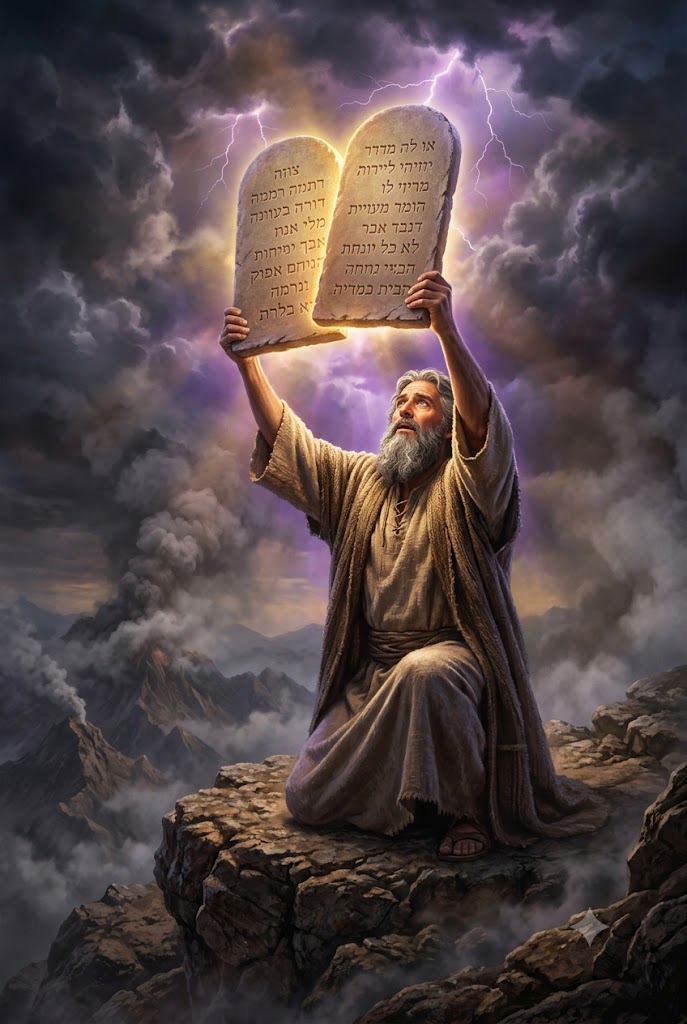
⚖️ Act Two — Four Commandments Concerning God (Verses 3–11) The first commandment is declared.
“You shall have no other gods before Me.”
No other gods before Me. Egypt had been a nation devoted to countless gods. The world Israel had just left was filled with the god of the Nile, the sun god, the frog goddess. This first commandment demanded a complete break from all of it.
The second commandment forbids the worship of images.
“You shall not make for yourself a carved image—any likeness of anything that is in heaven above, or that is in the earth beneath, or that is in the water under the earth; you shall not bow down to them nor serve them.”
You shall not make a carved image. This was not merely a prohibition against statues. It forbade the very attempt to confine God, in any form, within the limits of human imagination. God could not be represented in any image.
“For I, the LORD your God, am a jealous God, visiting the iniquity of the fathers upon the children to the third and fourth generations of those who hate Me, but showing mercy to thousands, to those who love Me and keep My commandments.”
Sin to the third and fourth generation, mercy to a thousand generations. This contrast dramatically reveals God’s character. Judgment is limited, but mercy is overwhelmingly vast.
The third commandment concerns God’s name.
“You shall not take the name of the LORD your God in vain, for the LORD will not hold him guiltless who takes His name in vain.”
Not take His name in vain. A name was not merely a title—it represented the very being itself. Using God’s name lightly, or as a tool for one’s own gain, was forbidden.
The fourth commandment is the Sabbath.
“Remember the Sabbath day, to keep it holy. Six days you shall labor and do all your work, but the seventh day is the Sabbath of the LORD your God. In it you shall do no work: you, nor your son, nor your daughter, nor your male servant, nor your female servant, nor your cattle, nor your stranger who is within your gates.”
You, your son, your daughter, your servants, your cattle. Sabbath rest was not a privilege reserved for a certain class. Master and servant alike, even the livestock, were to rest. This was a radical command in ancient society—rest belonged to everyone.
“For in six days the LORD made the heavens and the earth, the sea, and all that is in them, and rested the seventh day. Therefore the LORD blessed the Sabbath day and hallowed it.”
The very rhythm of creation itself was the basis for the Sabbath. This rhythm, already foreshadowed through manna in chapter 16, is now established as a commandment.
🤝 Act Three — Six Commandments Concerning Neighbor (Verses 12–17) The fifth commandment establishes order in the family.
“Honor your father and your mother, that your days may be long upon the land which the LORD your God is giving you.”
The first commandment with a promise attached. Honoring parents was not merely private ethics—it was tied to the continuity of a community across generations.
The next six commandments follow, short and forceful.
“You shall not murder. You shall not commit adultery. You shall not steal. You shall not bear false witness against your neighbor.”
Murder, adultery, theft, false witness—life, marriage, property, truth. These four things were among the most fundamental pillars upholding human society. These commandments are declared without elaborate explanation, short and unequivocal. That brevity itself signaled how absolute they were.
The final commandment addresses a different level entirely.
“You shall not covet your neighbor’s house; you shall not covet your neighbor’s wife, nor his male servant, nor his female servant, nor his ox, nor his donkey, nor anything that is your neighbor’s.”
You shall not covet. Where the previous commandments forbade actions, this final commandment addresses the state of the heart. Murder and theft always begin with covetousness before they ever become visible acts. God desired to govern not only outward sin, but the root from which it grew.
😨 Act Four — The People’s Fear and Moses’ Mediation (Verses 18–21) Immediately after the commandments are proclaimed, the people’s reaction is recorded.
“Now all the people witnessed the thunderings, the lightning flashes, the sound of the trumpet, and the mountain smoking; and when the people saw it, they trembled and stood afar off. Then they said to Moses, ‘You speak with us, and we will hear; but let not God speak with us, lest we die.'”
Lest we die. The people feared hearing God’s voice directly. They wanted Moses to become their mediator. This request becomes the first foreshadowing of the prophets to come, and ultimately, of the mediating work of Christ.
Moses reassures the people.
“And Moses said to the people, ‘Do not fear, for God has come to test you, and that His fear may be before you, so that you may not sin.'”
To test you, and that His fear may be before you. God’s overwhelming presence was not meant to destroy the people, but to plant within them a reverence that would keep them from sin.
📐 Act Five — Instructions Concerning the Altar (Verses 22–26) The chapter closes with practical instructions concerning how worship was to be conducted.
“Then the LORD said to Moses, ‘Thus you shall say to the children of Israel: “You have seen that I have talked with you from heaven. You shall not make anything to be with Me—gods of silver or gods of gold you shall not make for yourselves.”‘”
Then specific regulations concerning the altar are given.
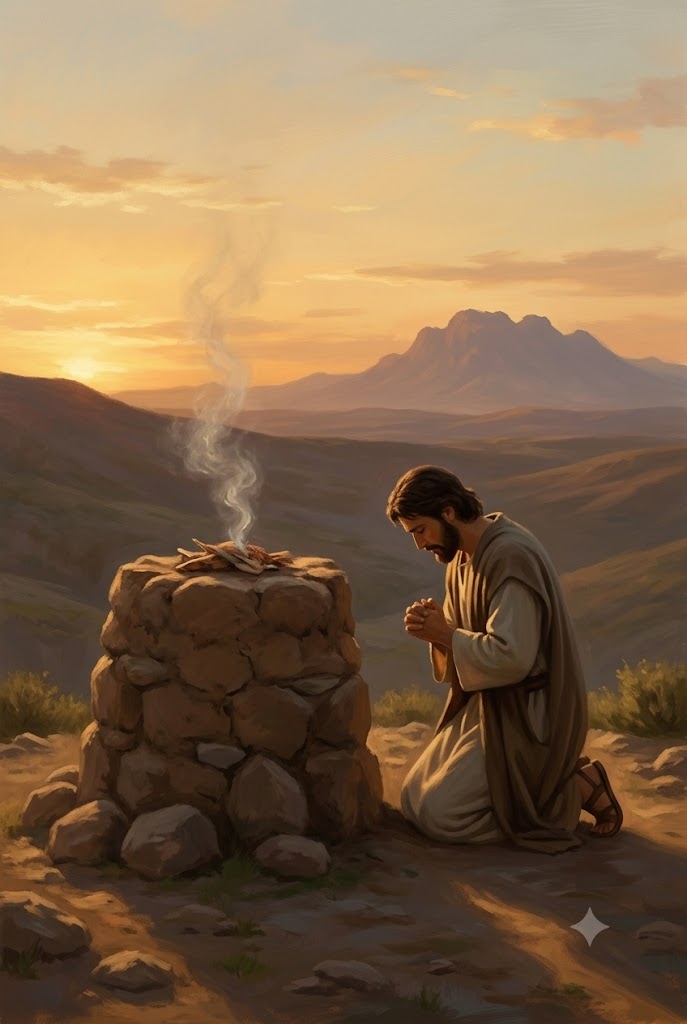
“An altar of earth you shall make for Me, and you shall sacrifice on it your burnt offerings and your peace offerings, your sheep and your oxen. In every place where I record My name I will come to you, and I will bless you.”
An altar of earth. Not an elaborate or intricately crafted altar, but a simple altar of earth. The essence of worship lay not in the grandeur of the structure, but in the genuine encounter with God.
“And if you make Me an altar of stone, you shall not build it of hewn stone; for if you use your tool on it, you have profaned it.”
Not built of hewn stone. Finely carved stone could become a symbol of human skill and pride. The place of coming before God was never meant to be a place for displaying human achievement.
🕊️ Reflection — Not Rules, But a Way of Life for the Beloved The first thing to remember from Exodus 20 is the order. The declaration “I am the LORD your God who brought you out” comes before every single commandment. The Ten Commandments were not a ladder to climb toward salvation, but a map for living given to those already saved.
Miss this order, and we begin to misunderstand faith as a matter of rule-keeping. But Scripture’s logic runs the opposite direction. We are not loved because we obey; we obey because we are already loved.
And look at the structure of these commandments. The first four concern God; the remaining six concern neighbor. The vertical relationship and the horizontal relationship cannot be separated. Whoever truly loves God will inevitably express that love through a life directed toward neighbor.
The final commandment, do not covet, is especially striking. It reminds us that sin always begins in the heart. Addressing the root in the heart is a more fundamental change than merely correcting visible behavior.
“Are the commandments, to you, rules that suppress freedom—or a framework for living in response to a love already received?”
📣 Coming Up Next Exodus Chapter 21 — The Detailed Laws of the Covenant Following the Ten Commandments, God gives specific ordinances governing everyday life—laws concerning servants, laws concerning injury, and more. The story of how a great principle applies down to the smallest details of daily life unfolds in the next episode.
#Exodus20 #TenCommandments #VoiceFromSinai #SabbathCommandment #DoNotCovet #GraceBeforeLaw #MosesAsMediator #AltarOfEarth #TheExodus #BibleStudy #ChristianBlog #Exodus #OldTestament #Scripture #Church #DailyDevotional #BiblicalFaith #GodsPower