Exodus Series — Episode 11
🔥 Prologue — The Final Plague Is Not a Negotiation, But a Proclamation Nine plagues had passed.
The river turned to blood, frogs overran the land, gnats rose from the dust, flies swarmed, livestock died, boils broke out, hail fell, locusts devoured, and darkness covered Egypt for three days. Nine chances. Nine warnings. Nine negotiations.
And Pharaoh had said, at last, “See my face no more. For in the day you see my face you shall die.”
The moment that door closed—Exodus 11 begins.
This chapter is short. But it carries more weight than any before it. There is no negotiation here. No conditions. No bargaining. Only a proclamation. The final plague was never something to be discussed. It was a judgment already settled.
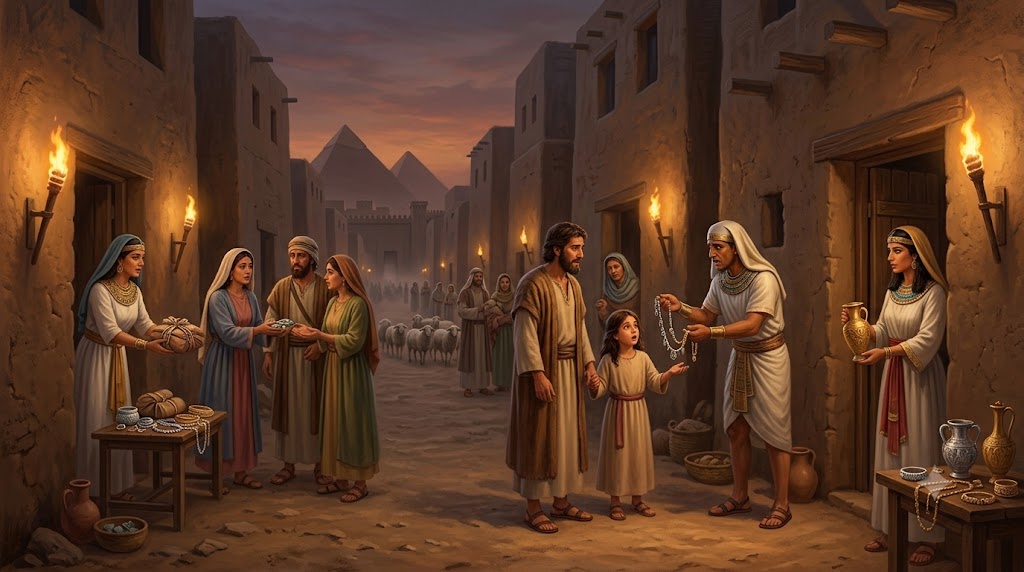
⚖️ Act One — The Announcement of the Final Plague (Verses 1–3) “And the LORD said to Moses, ‘I will bring one more plague on Pharaoh and on Egypt. Afterward he will let you go from here. When he lets you go, he will surely drive you out of here altogether.'”
One more plague. The last one. Nine plagues had already come, but after this one, there would be no further negotiation, no further refusal possible. This plague would bring Pharaoh’s resistance to a complete end.
And what followed was an unexpected instruction from God.
“Speak now in the hearing of the people, and let every man ask from his neighbor and every woman from her neighbor, articles of silver and articles of gold.”
Ask for silver and gold. Just before their departure, the people who had lived as slaves would receive treasures from those who had oppressed them. This was no accident.
“And the LORD gave the people favor in the sight of the Egyptians. Also the man Moses was very great in the land of Egypt, in the sight of Pharaoh’s servants and in the sight of the people.”
The LORD gave the people favor in the sight of the Egyptians. Israel, once enslaved, now found favor in the eyes of their oppressors. Moses, once a fugitive, was now regarded as a great man even by Pharaoh’s own officials. Even in the midst of judgment, God was preparing grace for His people.
As an age of oppression came to its end, God was not only granting freedom—He was restoring dignity along with it.
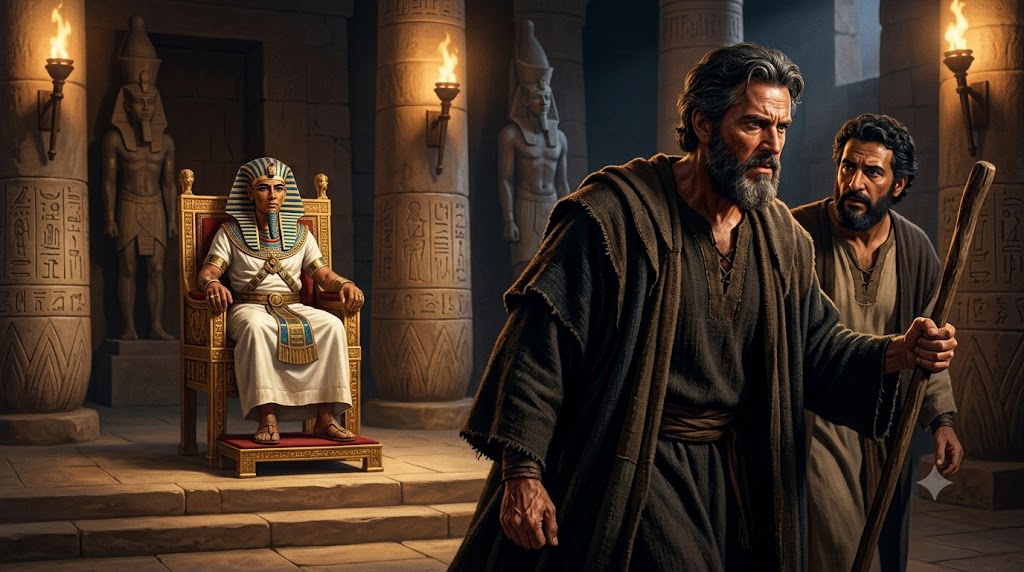
🌙 Act Two — The Announcement of the Death of the Firstborn (Verses 4–10) Moses now delivers his final word to Pharaoh. No longer a warning—a sentence.
“Then Moses said, ‘Thus says the LORD: About midnight I will go out into the midst of Egypt.'”
About midnight. The other plagues had come by day. The hail arrived at an appointed hour, the locusts with an east wind, the darkness the instant a hand was stretched out. But this final plague would come at night—at midnight itself. In the deepest darkness, in the quietest hour.
“And all the firstborn in the land of Egypt shall die, from the firstborn of Pharaoh who sits on his throne, even to the firstborn of the female servant who is behind the handmill, and all the firstborn of the animals.”
From the throne to the handmill. Rank meant nothing. The firstborn of the one seated on the royal throne and the firstborn of the lowest servant girl stood under the very same judgment. Before death, social class held no meaning.
“Then there shall be a great cry throughout all the land of Egypt, such as was not like it before, nor shall be like it again.”
A great cry unlike any before or after. Wailing would break out simultaneously across the entire land. A night when every house held mourning—a night without precedent in history.
Yet even in that moment, a contrast remained.
“But against none of the children of Israel shall a dog move its tongue, against man or beast, that you may know that the LORD does make a difference between the Egyptians and Israel.”
Not even a dog shall move its tongue. This is a striking expression. It was not merely that no plague touched Israel—not even the smallest disturbance reached them. On the very night all of Egypt was consumed in mourning, Israel’s dwellings remained in complete calm. God’s distinction was not reserved for great events alone—it extended down to the silence of a single dog.
Moses concludes with his final declaration.
“And all these your servants shall come down to me and bow down to me, saying, ‘Get out, and all the people who follow you!’ After that I will go out.” Then he went out from Pharaoh in great anger.
In great anger. Never before has Moses’ emotion been described so directly. Perhaps it was the accumulation of nine plagues and nine refusals. As God’s spokesman, he now bore the full weight of this final plague that Pharaoh’s hardness itself had brought about.
And the chapter closes with a brief summary.
“But the LORD said to Moses, ‘Pharaoh will not heed you, so that My wonders may be multiplied in the land of Egypt.’ So Moses and Aaron did all these wonders before Pharaoh; and the LORD hardened Pharaoh’s heart, and he did not let the children of Israel go out of his land.”
This summary looks back over all nine plagues at once. And it signals that only the final plague now remains. The time for negotiation has ended.
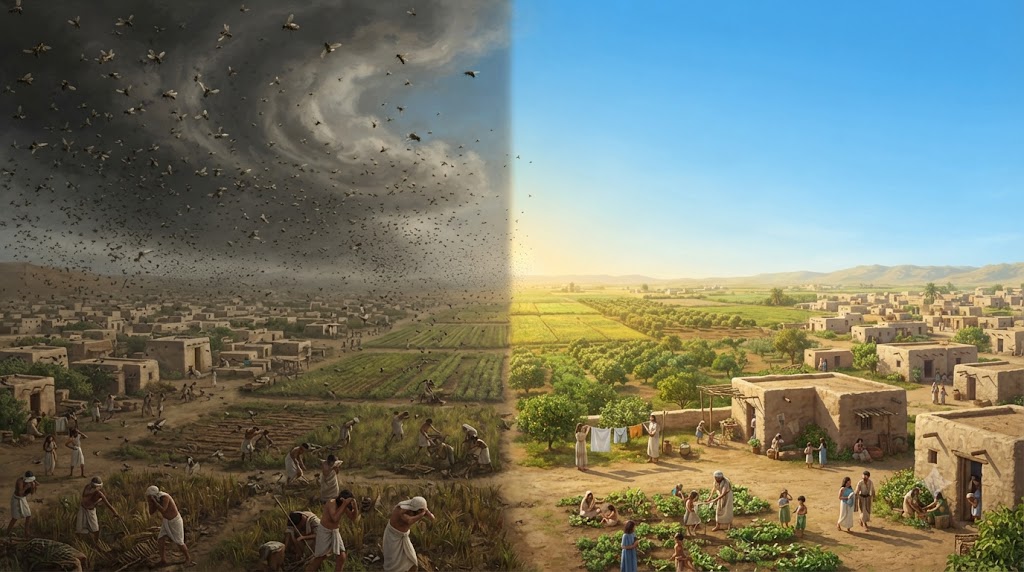
🕊️ Reflection — The Judgment of Midnight and the Silence of a Single Dog The contrast that lingers most from Exodus 11 is this: on the night when a cry unlike any other rose across all of Egypt, not even a dog barked in the dwellings of Israel.
This contrast is extreme. On one side, a night of collapse and mourning across an entire nation. On the other, a night so calm it seemed as though nothing had happened at all. At the very same hour, under the very same sky, two entirely different worlds existed side by side.
We often imagine judgment and grace as things far removed from one another. But Scripture shows they can exist side by side, in the very same night, at the very same moment. The calm given to God’s people was not incidental—it was a distinction God had prepared down to the smallest detail.
And this chapter reveals another truth. Pharaoh had been given nine opportunities. Nine warnings, and nine chances to choose differently. Yet each time, he made the same choice. In the end, the final plague was not a sudden judgment—it was the inevitable result of refusals accumulated over a long time.
“Are refusals quietly accumulating in your own life as well? Before the door of grace closes, can you turn back now?”
📣 Coming Up Next Exodus Chapter 12 — Passover and the Blood of the Lamb At last, the night arrives. A lamb is slain, and its blood is placed on the doorposts. Death passes over that house. The first night of Passover—the most decisive moment in the history of the Exodus—unfolds in the next episode.
#Exodus11 #DeathOfTheFirstbornAnnounced #MidnightJudgment #NotADogShallMoveItsTongue #PharaohsHardHeart #SilverAndGold #GodWhoDistinguishes #JudgmentAndGrace #PassoverForeshadowed #TenPlagues #BibleStudy #ChristianBlog #Exodus #OldTestament #Scripture #Church #DailyDevotional #BiblicalFaith #GodsPower