PROLOGUE — A New Book, a Familiar Problem
Judges 1 begins immediately after Joshua’s death, detailing how much — or how little — each tribe actually conquered of the land assigned to them. The uncomfortable pattern already hinted at repeatedly in the book of Joshua is now placed squarely at the opening of this entire book.
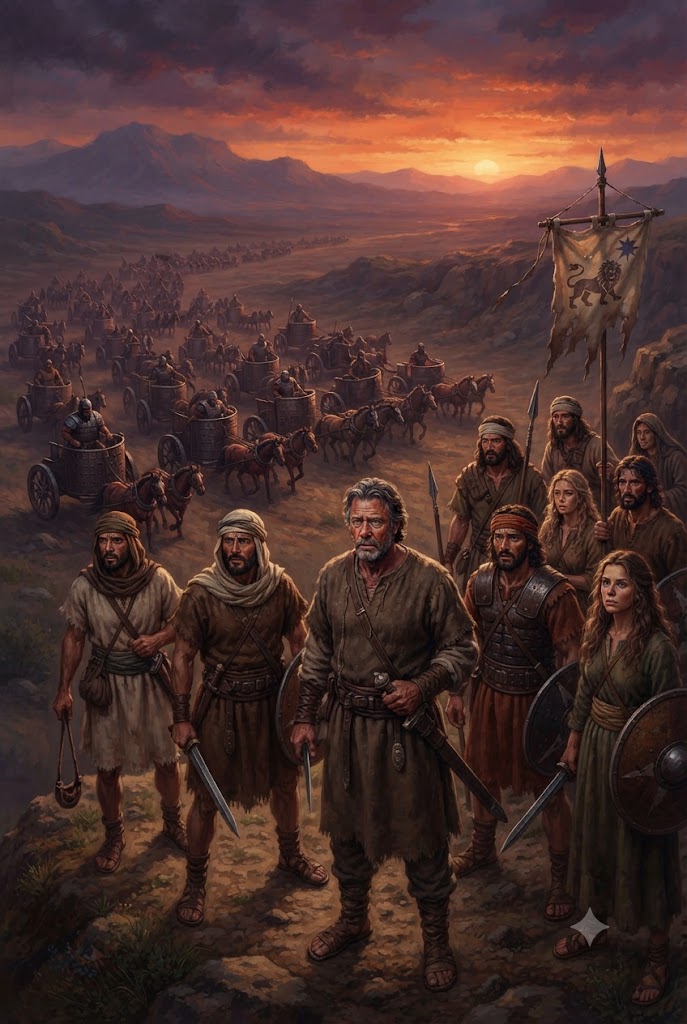
ACT ONE — The Early Victories of Judah and Simeon (verses 1–20)
“Now after the death of Joshua it came to pass, that the children of Israel asked the LORD, saying, Who shall go up for us against the Canaanites first, to fight against them? And the LORD said, Judah shall go up.”
Who shall go up for us first. This first moment of inquiring of God without Joshua marks the beginning of a new era — Israel now had to carry its own portion, tribe by tribe, without a central leader.
Judah and Simeon cooperated and achieved substantial victories — capturing Adonibezek, king of Bezek, and conquering Hebron and Debir (repeating the story of Caleb and Othniel already mentioned in Joshua 15). The story of Caleb’s daughter Achsah and the upper and lower springs reappears as well.
“And the LORD was with Judah; and he drave out the inhabitants of the mountain; but could not drive out the inhabitants of the valley, because they had chariots of iron.”
Could not drive them out, because they had chariots of iron. This short sentence is the first instance of a pattern that will recur throughout this entire book — victory in the hill country, but retreat before the iron chariots of the plain. This was the very enemy Joshua himself had confidently declared, in Joshua 17, could be driven out “though they have iron chariots.”
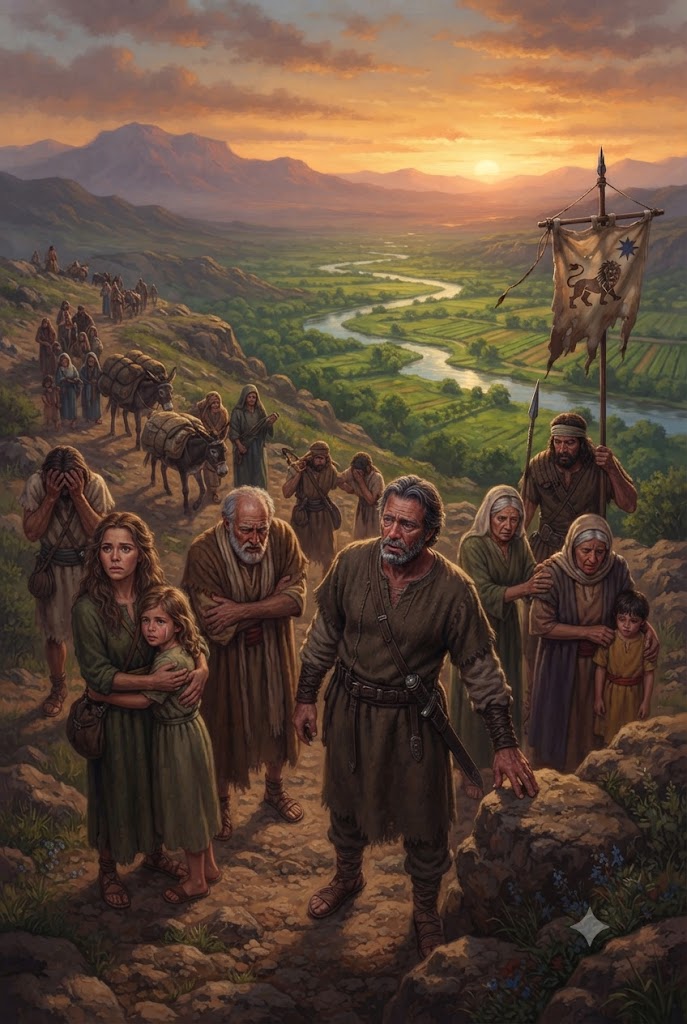
ACT TWO — A Repeated List of Failures (verses 21–36)
The text then lists, tribe by tribe, the cities that were not conquered.
“And the children of Benjamin did not drive out the Jebusites that inhabited Jerusalem; but the Jebusites dwell with the children of Benjamin in Jerusalem unto this day… Neither did Manasseh drive out… but the Canaanites would dwell in that land… Neither did Ephraim drive out… Neither did Zebulun drive out… Neither did Asher drive out… Neither did Naphtali drive out… And the Amorites forced the children of Dan into the mountain: for they would not suffer them to come down to the valley.”
Neither did… drive out. This phrase recurs, tribe after tribe — this refrain, appearing seven times, was no accident but deliberate literary emphasis. Across the whole of Israel, the conquest was never complete.
What stands out most is the situation of the tribe of Dan.
“And the Amorites forced the children of Dan into the mountain.”
Forced into the mountain. Where the other tribes had simply failed to fully expel the Canaanites, Dan found themselves actually forced back by the enemy — a humiliating situation already hinted at in Joshua 19, and later leading to their migration in Judges 18.
REFLECTION — Cracks Visible From the Very Beginning
The insight Judges 1 gives us is that the dark trajectory of this entire book was never sudden — its seeds were already planted from the very first page of the conquest era. Partial obedience — retreating before iron chariots, choosing coexistence over complete conquest — was never a trivial compromise, but a root that would grow into a far greater spiritual crisis later.
Is there an area of “partial obedience” in your own life that seems minor now, but could grow into a larger problem over time?
NEXT EPISODE PREVIEW
Judges Chapter 2 — the theological cycle running through the entire book — sin, punishment, crying out, deliverance — is clearly explained.
Tags: #Judges1 #ReviewAfterJoshua #CouldNotDriveThemOutIronChariots #SevenTimesRepeatedCouldNot #HumiliationOfDan #RootsOfPartialObedience #Judges #BibleDevotional #ChristianBlog #BibleStudy #OldTestament #Bible #Church #Devotion #Christianity #ConnectionToJoshua17 #CracksFromTheBeginning #DailyDevotional