PROLOGUE — The Final Section Begins, and Brothers Return Home
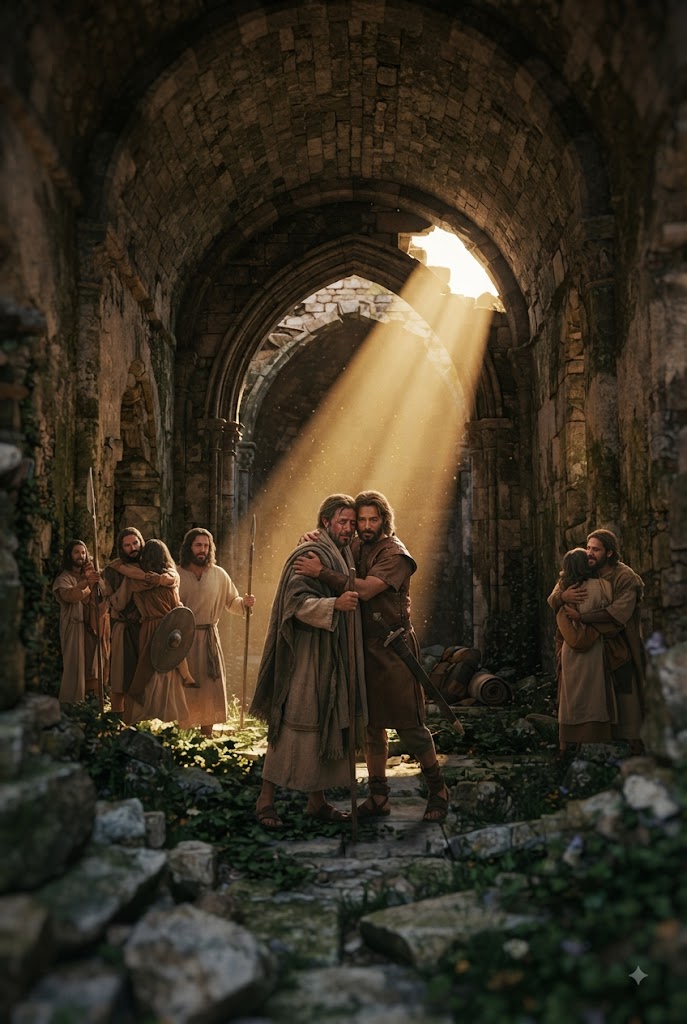
Joshua 22 opens this book’s final section (farewell and covenant renewal, chapters 22–24). It begins with the three tribes east of the Jordan (Reuben, Gad, and half the tribe of Manasseh) completing the conquest alongside their brothers, exactly as promised in Deuteronomy and Joshua 1, and now returning to their own land.
ACT ONE — Joshua’s Gratitude and Blessing (verses 1–9)
“Then Joshua called the Reubenites, and the Gadites, and the half tribe of Manasseh, And said unto them, Ye have kept all that Moses the servant of the LORD commanded you… Ye have not left your brethren these many days unto this day, but have kept the charge of the commandment of the LORD your God. And now the LORD your God hath given rest unto your brethren, as he promised them: therefore now return ye, and get you unto your tents, and unto the land of your possession, which Moses the servant of the LORD gave you.”
Ye have not left your brethren. These three tribes had perfectly kept the condition established in Numbers 32 — the promise to fight alongside their brothers until they were settled. Joshua publicly acknowledged and blessed their faithfulness.
ACT TWO — A Great Altar, and Immediate Misunderstanding (verses 10–20)
On their way home, the tribes east of the Jordan built a very large, conspicuous altar by the river. But the rest of Israel understood this news entirely differently.
“And when the children of Israel heard say, Behold, the children of Reuben and the children of Gad and the half tribe of Manasseh have built an altar over against the land of Canaan, in the borders of Jordan, at the passage of the children of Israel, the whole congregation of the children of Israel gathered themselves together at Shiloh, to go up to war against them.”
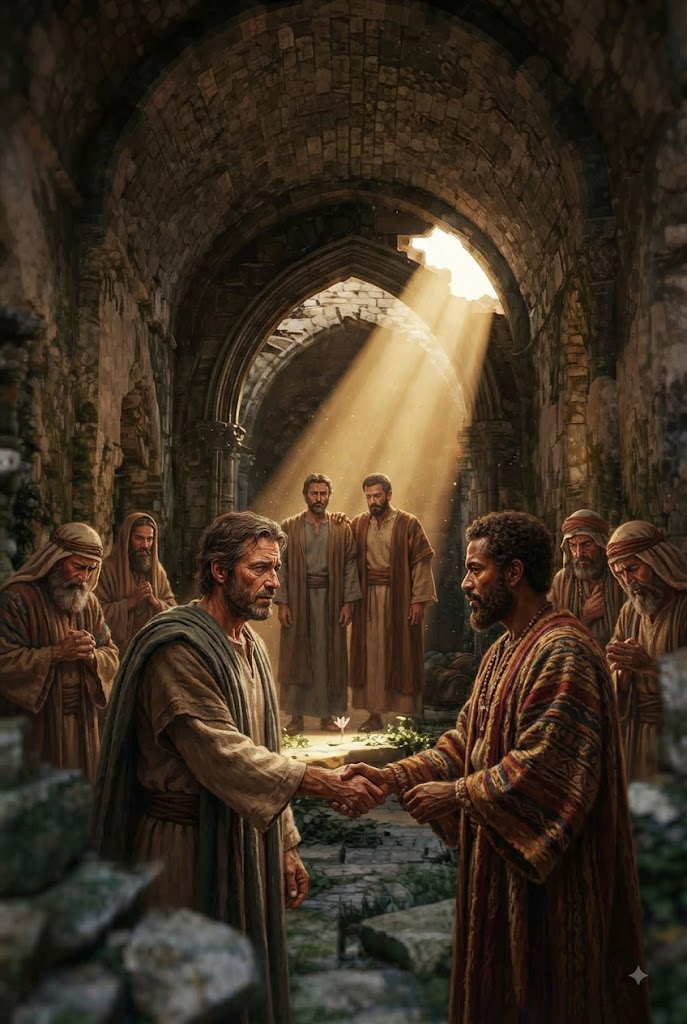
Gathered themselves together… to go up to war. The immediate response was preparation for war — they mistook it as a violation of the centralized worship principle of Deuteronomy 12 (sacrifice only at one appointed place).
A delegation led by Phinehas was sent to deliver a forceful protest.
“Thus saith the whole congregation of the LORD, What trespass is this that ye have committed against the God of Israel, to turn away this day from following the LORD… If ye rebel to day against the LORD, then to morrow he will be wroth with the whole congregation of Israel.”
ACT THREE — The Truth Explained, an Altar for Testimony (verses 21–29)
The response of the tribes east of the Jordan was remarkably earnest and clear.
“We have not done it… in rebellion… nor for burnt offering, nor for meat offering, nor for sacrifice: But we have done it for fear of this thing, saying, In time to come your children might speak unto our children, saying, What have ye to do with the LORD God of Israel? For the LORD hath made Jordan a border between us and you… that it might be a witness between us, and you, and our generations after us… that this altar… shall be a witness between us and you.”
That it might be a witness. The truth was revealed — this altar was never for worship. It was a monument built to permanently testify to their belonging, out of concern that the physical boundary of the Jordan River might one day cause future generations to mistakenly believe they were not part of Israel.
ACT FOUR — Misunderstanding Resolved, Peace Restored (verses 30–34)
“And when Phinehas the priest, and the princes of the congregation and heads of the thousands of Israel which were with him, heard the words that the children of Reuben and the children of Gad and the children of Manasseh spake, it pleased them… This day we perceive that the LORD is among us… Ye have delivered the children of Israel out of the hand of the LORD this day.”
This day we perceive that the LORD is among us. The misunderstanding was completely resolved, and what could have become a serious civil war was peacefully settled through dialogue and clear explanation.
REFLECTION — The Wisdom of Asking First, Rather Than Judging Hastily
The most practical lesson Joshua 22 gives us is how important it is to first engage in dialogue and confirm the truth, rather than hastily judging based on outward appearance alone. Had Israel gone straight to war, a tragic civil war between brother tribes would have followed.
When misunderstanding arises, do you seek a conversation to confirm the truth first, rather than reacting or judging immediately?
NEXT EPISODE PREVIEW
Joshua Chapter 23 — the aged Joshua’s first farewell sermon unfolds.
Tags: #Joshua22 #ReturnOfTheEasternTribes #TheGreatAltarAndMisunderstanding #AWitnessBetweenUs #MisunderstandingResolvedPeaceRestored #PhinehasProtest #Joshua #BibleDevotional #ChristianBlog #BibleStudy #OldTestament #Bible #Church #Devotion #Christianity #Deuteronomy12CentralizedWorship #WisdomOfAskingBeforeJudging #DailyDevotional