PROLOGUE — Greater Privilege, Greater Responsibility
Leviticus 21 addresses the stricter holiness regulations required of priests. While all of Israel was called to holiness, those who served in the sanctuary on God’s behalf were held to an even higher standard. The principle that greater privilege carries greater responsibility is made explicit here.
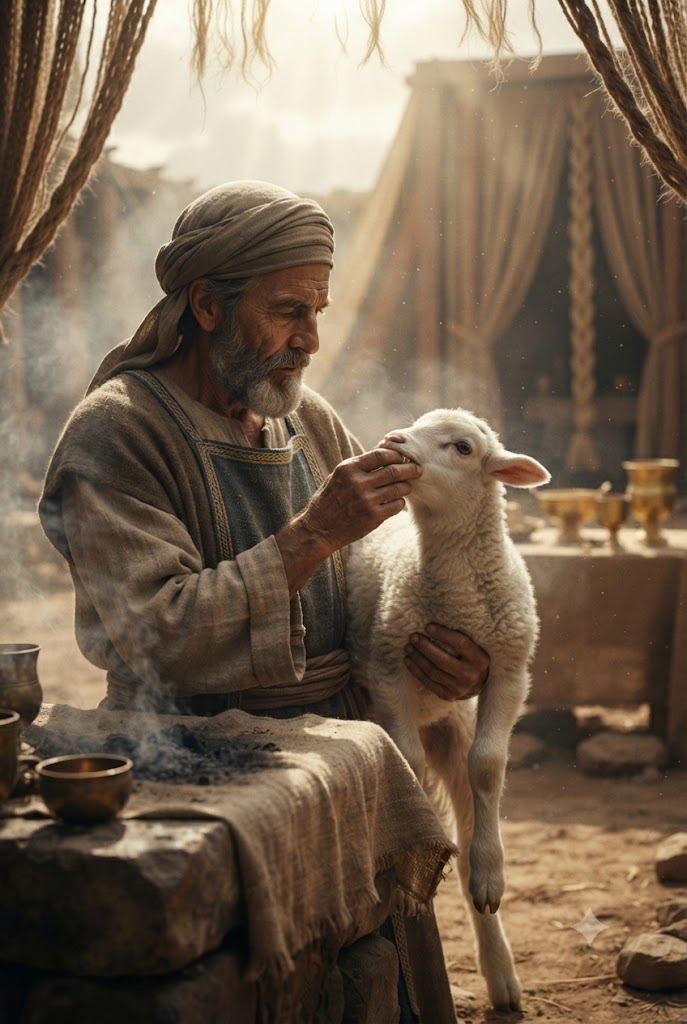
ACT ONE — Restrictions on Mourning for the Dead (verses 1–9)
“There shall none be defiled for the dead among his people: But for his kin, that is near unto him, that is, for his mother, and for his father, and for his son, and for his daughter, and for his brother… for her may he be defiled.”
Only for the nearest kin. A priest had to guard himself from contact with death in general, but an exception was permitted for the closest family — parents, children, siblings. God did not fully deny the priest’s human grief and duty of love; holiness was never meant to erase human affection.
ACT TWO — An Even Stricter Standard for the High Priest (verses 10–15)
The high priest was not permitted even the customary signs of mourning (unbinding the hair or tearing garments), even for his own parents.
“He shall not uncover his head, nor rend his clothes; Neither shall he go in to any dead body, nor defile himself for his father, or for his mother.”
Nor for his father, or for his mother. An extraordinarily strict requirement. The high priest’s office took precedence over every moment of his personal life — revealing just how heavy the responsibility he carried in the sanctuary truly was.
ACT THREE — Only Those Without Physical Blemish May Serve (verses 16–24)
“Whosoever he be of thy seed in their generations that hath any blemish, let him not approach to offer the bread of his God. For whatsoever man he be that hath a blemish, he shall not approach: a blind man, or a lame, or he that hath a flat nose, or any thing superfluous.”
This list may feel deeply uncomfortable to modern readers. But as the text itself makes clear, this was never a judgment on the human dignity of someone with a physical impairment.
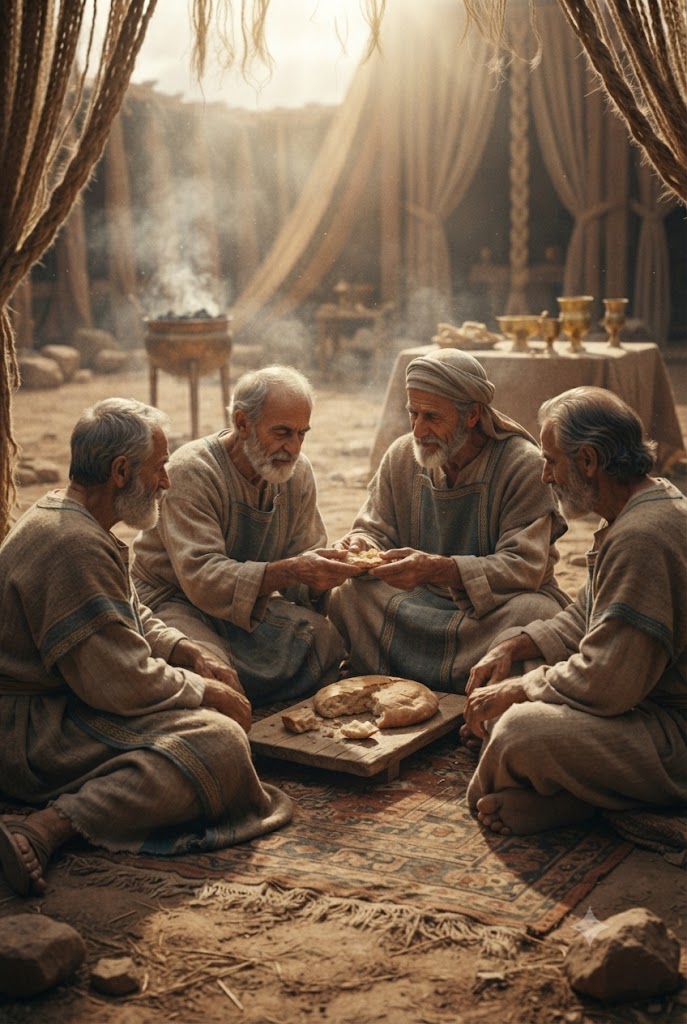
“He hath a blemish; he shall not go in unto the vail, nor come nigh unto the altar, because he hath a blemish… He shall eat the bread of his God, both of the most holy, and of the holy.”
He shall eat the bread of his God. A critically important detail. Even a descendant of the priesthood with a physical blemish retained the right to share in God’s holy food — he was never wholly excluded. Only the role of directly officiating at the altar was restricted. This reflected an ancient Near Eastern symbolic convention — approaching a perfect God with what is whole — and concerned symbolic completeness, not personal discrimination.
REFLECTION — Looking to the Blameless High Priest
The physical and ritual perfection Leviticus 21 required was a standard no human priest could ever fully meet. Hebrews addresses this tension directly — we needed a perfect high priest, one “without sin, yet in every respect tempted as we are” (Hebrews 4:15). In Christ, the blamelessness that Leviticus demanded only as a shadow appeared as substance.
Rather than being ashamed of your own imperfection, do you rest in the freedom found in Christ, our perfect high priest?
NEXT EPISODE PREVIEW
Leviticus Chapter 22 — regulations for handling holy offerings, and the principle that sacrifices must be without blemish, follow.
Tags: #Leviticus21 #HolinessOfThePriesthood #StricterStandardForHighPriest #PriestWithoutBlemish #HeShallEatTheBread #Hebrews4 #Leviticus #BibleDevotional #ChristianBlog #BibleStudy #OldTestament #Bible #Church #Devotion #Christianity #PerfectHighPriestChrist #SymbolicCompleteness #DailyDevotional