Leviticus Series — Episode 2
🌾 Prologue — An Offering That Requires No Death
The burnt offering in chapter 1 required an animal’s death and the shedding of blood.
But Leviticus 2 introduces an offering of an entirely different character. The grain offering—given from the produce of the field. This offering involves no blood. Not the sacrifice of a life, but the labor and fruit of the earth is given. Where the burnt offering symbolized atonement and total devotion, the grain offering symbolized gratitude, devotion, and acknowledgment of the daily bread God provides.
🌾 Act One — The Grain Offering of Fine Flour (Verses 1–3)
“When anyone offers a grain offering to the LORD, his offering shall be of fine flour. And he shall pour oil on it, and put frankincense on it.”
Fine flour. Not roughly ground grain, but flour carefully milled to fineness. This shows that time and labor were already invested in the very process of preparing it.
“He shall pour oil on it, and put frankincense on it.” Oil symbolized abundance and the presence of the Spirit; frankincense symbolized worship rising as a fragrant aroma to God. Both revealed that this offering was never mere food, but holy devotion.
The priest’s role follows.
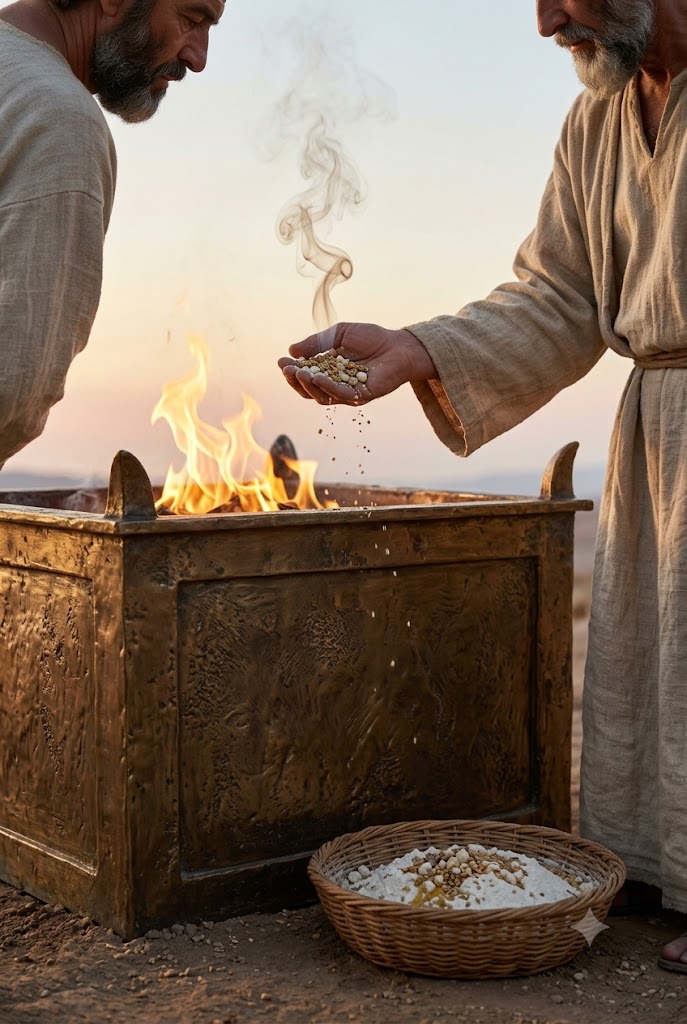
“He shall bring it to Aaron’s sons, the priests, one of whom shall take from it his handful of fine flour and oil, with all the frankincense. And the priest shall burn it as a memorial on the altar, an offering made by fire, a sweet aroma to the LORD.”
Only a handful. Remarkably, the entire offering was not burned. Only a handful—a small representative portion—was burned on the altar. This was a decisive difference from the burnt offering.
And the remainder became the priests’ portion.
“The rest of the grain offering shall be Aaron’s and his sons’. It is most holy of the offerings to the LORD made by fire.”
This regulation carries very practical wisdom. Unlike the other tribes, the priests received no land as an inheritance. This remainder of the grain offering became their daily provision.
🔥 Act Two — Baked in the Oven, on a Griddle, or in a Pan (Verses 4–10)
The grain offering could be prepared in various ways.
“And if you bring as an offering a grain offering baked in the oven, it shall be unleavened cakes of fine flour mixed with oil, or unleavened wafers anointed with oil.”
Baked on a griddle, cooked in a pan—several methods of preparation follow. This variety shows that the grain offering could be prepared according to each household’s means and tools.
But two prohibitions had to be strictly observed.
“No grain offering which you bring to the LORD shall be made with leaven, for you shall burn no leaven nor any honey in any offering to the LORD made by fire.”
Leaven and honey forbidden. Leaven symbolized fermentation and corruption, and throughout the rest of Scripture is frequently used as a metaphor for sin or moral decay (see 1 Corinthians 5:6-8). Honey, too, is thought to have been excluded because of its tendency to ferment quickly. What was given to God had to be something pure and unchanging, not something with the potential to decay.
Instead, one thing had to always be included.
“And every offering of your grain offering you shall season with salt; you shall not allow the salt of the covenant of your God to be lacking from your grain offering. With all your offerings you shall offer salt.”
The salt of the covenant. Salt was a preservative against decay, and at the same time symbolized the permanence and faithfulness of a covenant. In the ancient Near East, sharing salt was a sign of an unbreakable relationship. This command to add salt to every grain offering was a symbolic act expressing the hope that the covenant between God and His people would never be corrupted.
🌾 Act Three — The Grain Offering of First Fruits (Verses 11–16)
Finally, a special form of the grain offering is introduced.
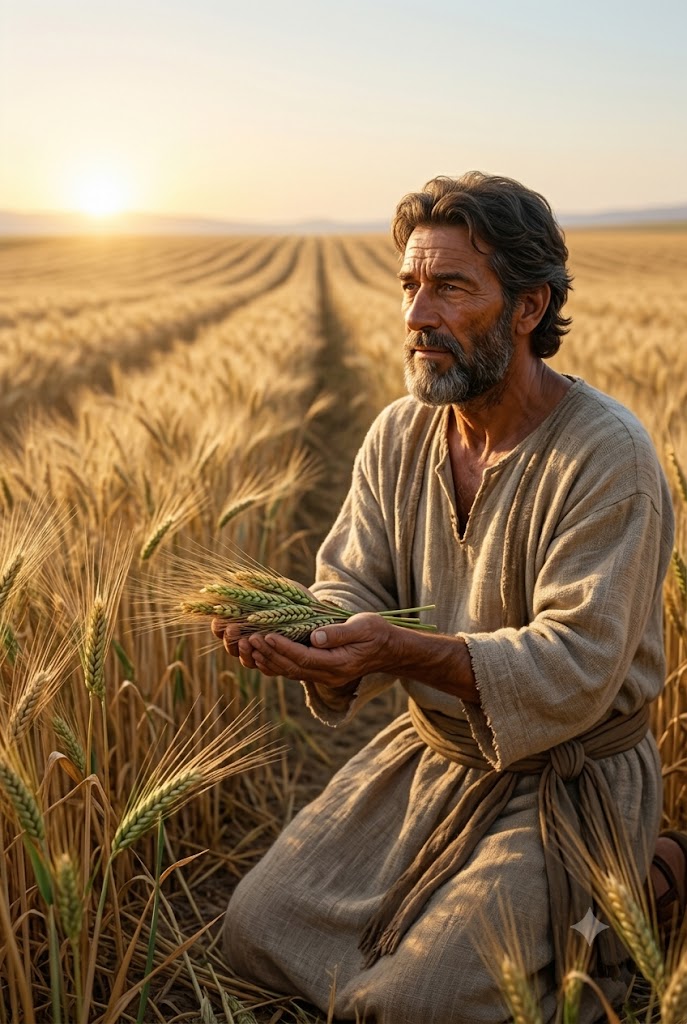
“If you offer a grain offering of your firstfruits to the LORD, you shall offer for the grain offering of your firstfruits green heads of grain roasted on the fire, grain beaten from full heads.”
Firstfruits. This was the very first harvest of the year. Not yet fully ripened, the earliest and freshest grain was given. Giving the first fruits before even seeing the full result of the harvest was a deep expression of trust.
“And you shall put oil on it, and lay frankincense on it. It is a grain offering.”
This offering of firstfruits, too, was given with oil and frankincense added, just like the other grain offerings. Its form was special, but its principle remained the same.
🕊️ Reflection — Making the Ordinary Holy
The deepest truth in Leviticus 2 is this: the grain offering involved no bloodshed, yet it was never regarded as any less holy. In fact, the text calls it “most holy.” Ordinary grain, the very material of daily bread, could become a holy offering when given with care and purity.
This teaches us something important. Worship does not always demand dramatic sacrifice. Our ordinary daily life—what we earn through our work, what we make through our labor—can also become holy worship when offered with sincerity.
And the regulation forbidding leaven and honey while requiring salt. This reminds us that our devotion must not decay, but must continue faithfully, like a covenant.
Can the labor of your ordinary days also become a holy offering when given to God?
📣 Coming Up Next
Leviticus Chapter 3 — The Peace Offering, a meal shared together. The meaning of this unique sacrifice, in which God and the worshiper seem to sit at the same table, unfolds in the next episode.
Tags: #Leviticus2 #TheGrainOffering #FineFlourOilAndFrankincense #NoLeavenNoHoney #TheSaltOfTheCovenant #FirstfruitsOffering #MostHoly #Leviticus #BibleStudy #ChristianBlog #OldTestament #Scripture #Church #DailyDevotional #BiblicalFaith #GodsWord