Exodus Series — Episode 22
🔥 Prologue — God’s Emotion Hidden Within the Legal Code Where chapter 21 dealt with laws concerning servants and injury, chapter 22 broadens that scope even further.
Practical laws continue—concerning theft, property damage, responsibility for borrowed items—but at the heart of this chapter lie verses of an entirely different character. Words spoken directly, and with deep emotion, by God concerning the stranger, the widow, and the orphan—the most vulnerable members of society.
There are moments, scattered among the legal provisions, where God’s heart suddenly breaks through. Reading through this chapter, one comes to realize that Israel’s law was never merely a tool for maintaining order—it was a mirror reflecting the very character of God.
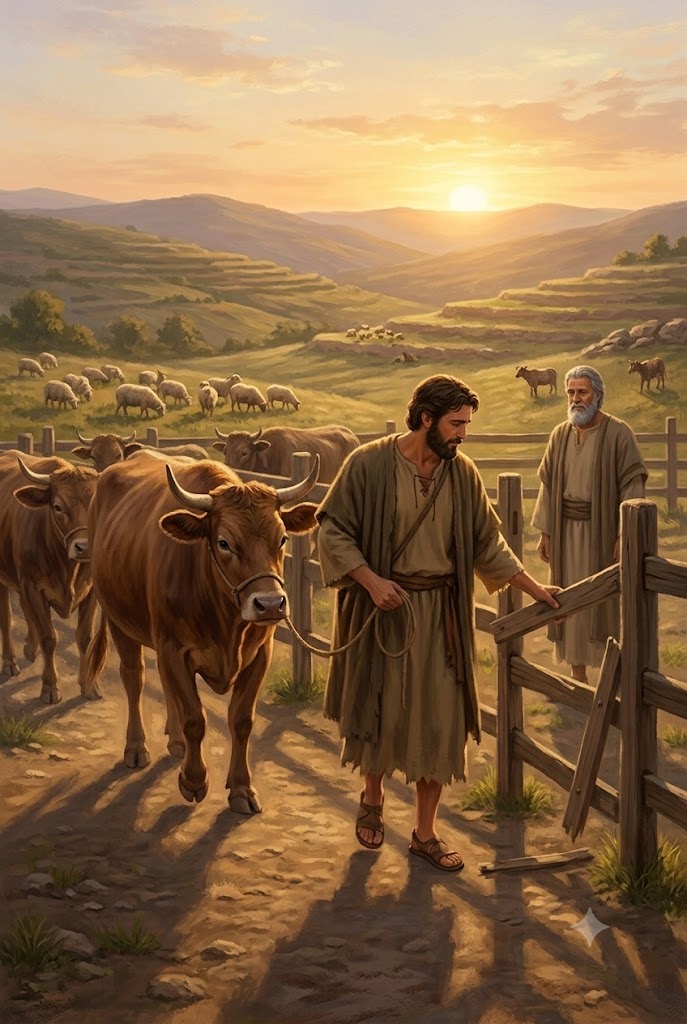
🐑 Act One — Laws Concerning Theft and Property Damage (Verses 1–15) “If a man steals an ox or a sheep, and slaughters it or sells it, he shall restore five oxen for an ox and four sheep for a sheep.”
Restitution of fivefold, fourfold. This was not mere restoration of what was lost. Theft required restitution far exceeding the actual damage. This shows that the crime of theft was not merely a loss of property, but a serious offense against a neighbor’s trust and security.
Regulations concerning self-defense are given as well.
“If the thief is found breaking in, and he is struck so that he dies, there shall be no guilt for his bloodshed. If the sun has risen on him, there shall be guilt for his bloodshed.”
The distinction between night and day. Defense in the darkness of night, when an intruder’s intent could not be known, was justified. But taking a life after sunrise, when circumstances could be clearly assessed, was a different matter entirely. This careful distinction shows how cautiously the value of life was treated.
Regulations concerning damage to fields or vineyards follow.
“If a man causes a field or vineyard to be grazed over, or lets loose his animal, and it feeds in another man’s field, he shall make restitution from the best of his own field and the best of his own vineyard.”
Restitution from the best. Restitution was to be made not with the minimum, but with the best. This demanded an attitude that never treated harm to a neighbor lightly.
Responsibility for entrusted property is also detailed.
“If a man delivers to his neighbor money or articles to keep, and it is stolen out of the man’s house, if the thief is found, he shall pay double.”
These detailed regulations show how precious trust was meant to be within the community. Entrusting something to someone was itself an expression of trust in the relationship, and that trust deserved the protection of the law.
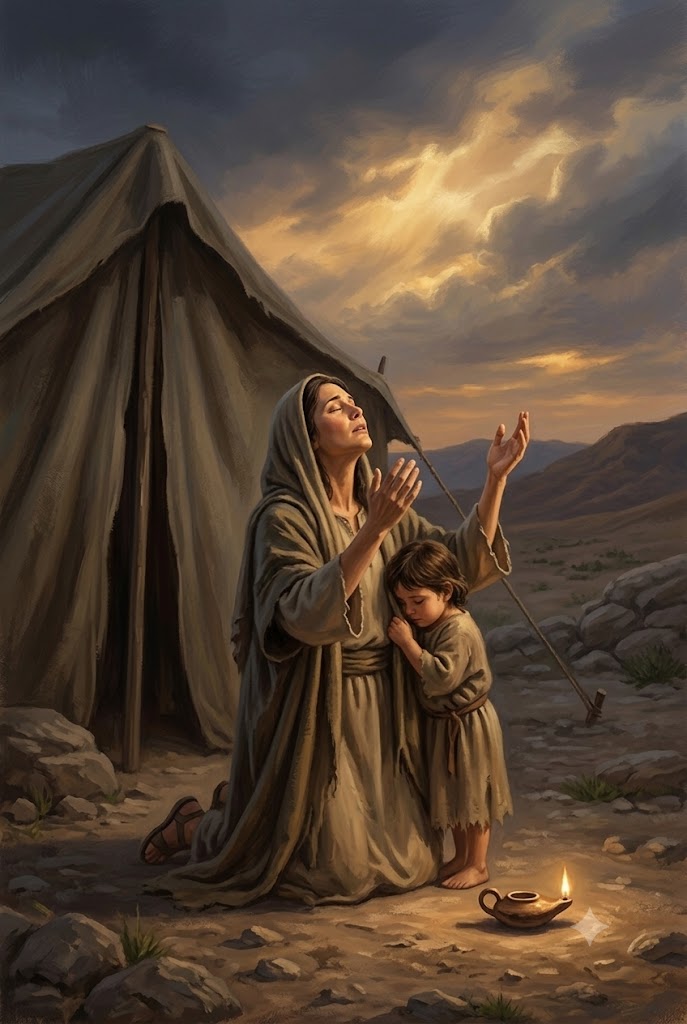
🕯️ Act Two — Ordinances Concerning Morality and Faith (Verses 16–20) The character of the law shifts briefly, turning to regulations concerning morality and faith.
“If a man entices a virgin who is not betrothed, and lies with her, he shall surely pay the bride-price for her to be his wife.”
Three brief but forceful commands follow.
“You shall not permit a sorceress to live. Whoever lies with an animal shall surely be put to death. He who sacrifices to any god, except to the LORD only, he shall be utterly destroyed.”
These three verses show that Israel had to be fundamentally distinct from the surrounding nations. Divination, idol worship, sexual perversion—practices common within the religious cultures of Egypt and Canaan—could never be tolerated within Israel.
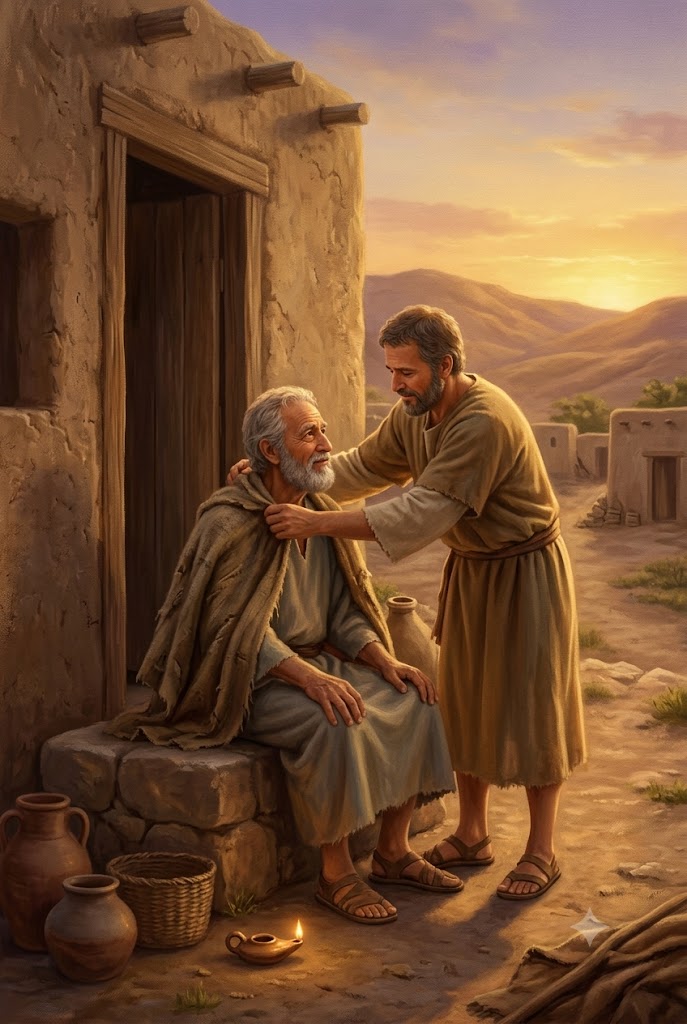
😢 Act Three — God’s Heart for the Stranger, the Widow, and the Orphan (Verses 21–27) And here appear the most emotionally intense verses in this chapter.
“You shall neither mistreat a stranger nor oppress him, for you were strangers in the land of Egypt.”
For you were strangers in the land of Egypt. This is the core logic. The memory that Israel itself had once been vulnerable in a foreign land determines how they must now treat other vulnerable people. Not forgetting the suffering one has endured—this is the starting point of compassion and justice.
And God speaks concerning widows and orphans with unprecedented intensity.
“You shall not afflict any widow or fatherless child. If you afflict them in any way, and they cry at all to Me, I will surely hear their cry.”
I will surely hear their cry. In this sentence, God’s emotion is expressed directly. Unlike most of the other legal provisions, written in a relatively objective tone, this verse is spoken in God’s own first-person response—I will hear, I will surely hear.
And the consequence follows.
“And My wrath will become hot, and I will kill you with the sword; your wives shall be widows, and your children fatherless.”
This warning carries a striking paradox. The judgment falling upon one who mistreats widows and orphans was—that his own family would become widows and orphans. The principle of reaping what one sows appears here with stark clarity.
Regulations concerning the poor follow as well.
“If you ever take your neighbor’s garment as a pledge, you shall return it to him before the sun goes down. For that is his only covering, it is his garment for his skin. What will he sleep in? And it will be that when he cries to Me, I will hear, for I am gracious.”
I will hear, for I am gracious. Once more, the phrase “I will hear” is repeated. And this time, the reason is stated explicitly—because God is gracious.
📜 Act Four — Remaining Ordinances (Verses 28–31) The final section of this chapter closes with several brief regulations.
“You shall not revile God, nor curse a ruler of your people.”
“You shall not delay to offer the first of your ripe produce and your juices. The firstborn of your sons you shall give to Me.”
The offering of firstfruits to God is emphasized once more here.
“And you shall be holy men to Me: you shall not eat meat torn by beasts in the field; you shall throw it to the dogs.”
You shall be holy men to Me. This closing sentence of the chapter summarizes the ultimate purpose of all these detailed ordinances. Restitution for theft, protection for the stranger, justice for the widow and orphan—all of it flowed from Israel’s identity as a holy people belonging to God.
🕊️ Reflection — The God Who Hears the Cry The truth that stirs the heart most deeply in Exodus 22 is this: God maintains a relatively measured tone when addressing property regulations, but when the narrative reaches the stranger, the widow, and the orphan, His tone shifts entirely. “I will surely hear their cry.” This is not a legal clause—it is a declaration charged with emotion.
This contrast teaches us something important. Property and rules matter to God, but above all, His heart for the most vulnerable stands at the very center of His justice. Throughout Scripture, God repeatedly identifies Himself as a father to the fatherless and a defender of widows (Psalm 68:5). This identity is already vividly present here in Exodus 22.
And let us remember: “for you were strangers in the land of Egypt.” The grace we have received and the hardship we have endured should not make us blind to another’s suffering—they should make us respond to it all the more sensitively. Those who remember the mercy they received become people who extend mercy to others.
“Is there someone near you who is crying out right now? God surely hears that cry.”
📣 Coming Up Next Exodus Chapter 23 — Justice and the Sacred Festivals Ordinances concerning fair judgment, the Sabbatical year, and the three great festivals follow. The story of how Israel’s entire life was shaped within the rhythm of God unfolds in the next episode.
#Exodus22 #LawOfRestitution #DoNotOppressTheStranger #WidowAndOrphan #IWillSurelyHear #TheGraciousGod #HolyPeople #TheBookOfTheCovenant #TheExodus #BibleStudy #ChristianBlog #Exodus #OldTestament #Scripture #Church #DailyDevotional #BiblicalFaith #GodsPower