Exodus Series — Episode 6
🔥 Prologue — The God Who Answers the Lament
Moses had cried out.
“Lord, why have You brought trouble on this people? Why is it You have sent me?”
He had obeyed and conditions had deteriorated. He had stood before Pharaoh at God’s explicit instruction—and Israel’s suffering had doubled. The people had condemned him. Moses had brought his protest directly to God.
And God answered.
He did not turn away from the lament. He did not retreat from the protest. He responded—with words deeper, more majestic, and more certain than anything spoken before. Exodus Chapter 6 is the most magnificent divine self-proclamation in the entire book—delivered precisely at the bottom of human despair.
“I am the LORD.”
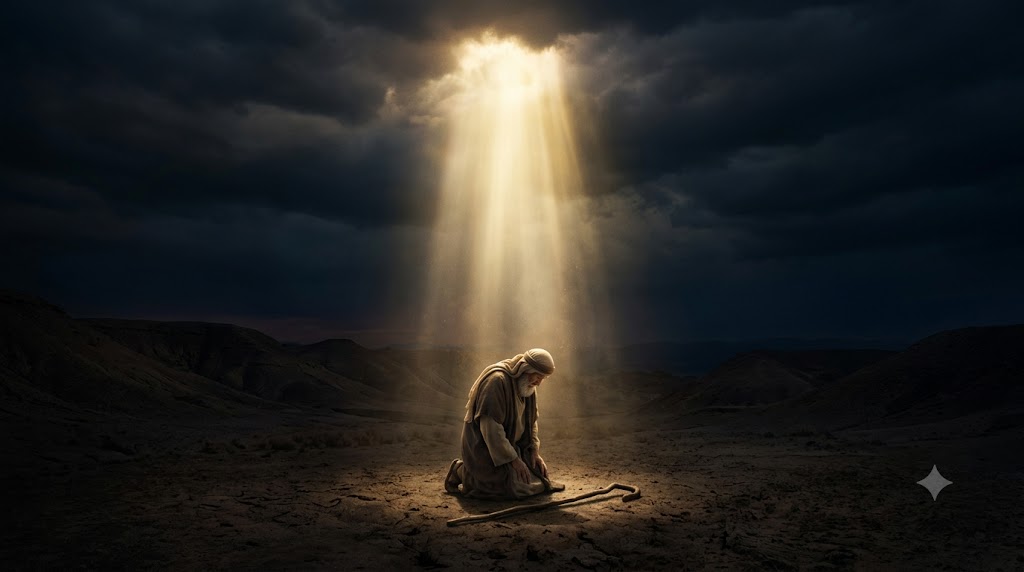
⚡ Act One — The Divine Response: I Am the LORD (Verses 1–8)
“Then the LORD said to Moses, ‘Now you shall see what I will do to Pharaoh. For with a strong hand he will let them go, and with a strong hand he will drive them out of his land.'”
Now you shall see. God did not respond to Moses’ lament with argument or explanation. He responded with proclamation. I will act—watch.
Then came the most thunderous divine self-disclosure in the Exodus narrative thus far.
“And God spoke to Moses and said to him: ‘I am the LORD.'”
I am the LORD. Not a restatement of information already known. A declaration of ontological identity hurled into the center of human despair. Regardless of how the situation appears—I have not changed. However Pharaoh responds—I am still the LORD. Whatever the people say—I AM who I AM.
“I appeared to Abraham, to Isaac, and to Jacob, as God Almighty, but by My name LORD I was not known to them.”
A staggering revelation. To the patriarchs, God had revealed Himself as El Shaddai—God Almighty—the God of sufficiency and power. But the full weight of the name YHWH—the self-existent One, the covenant-keeping One, the One who acts decisively within history—was about to be demonstrated through Moses, through the Exodus, for the first time at full scale.
“I have also established My covenant with them… therefore say to the children of Israel: ‘I am the LORD.'”
I have remembered My covenant. Divine remembrance is not passive recollection. When God remembers, He intervenes. Memory and action are inseparable in the divine economy.
Then six covenant promises cascaded in rapid succession—the complete architecture of what God was about to do.
First — “I will bring you out from under the burdens of the Egyptians.” Liberation from systemic oppression.
Second — “I will rescue you from their bondage.” Deliverance from the condition of slavery itself.
Third — “I will redeem you with an outstretched arm and with great judgments.” Redemption through divine power.
Fourth — “I will take you as My people.” Restoration of identity—the constitution of a covenant people.
Fifth — “I will be your God.” Restoration of relationship—the personal covenant bond.
Sixth — “I will bring you into the land which I swore to give to Abraham, Isaac, and Jacob.” Fulfillment of the territorial promise across generations.
Six promises. Read them slowly—the entire subsequent narrative of Exodus is the sequential fulfillment of these six declarations. God announced the conclusion before the story had begun to unfold. He spoke of the not-yet-accomplished as though it were already complete.
“I am the LORD.”
The same declaration closes the sequence of promises. The guarantor of every one of these commitments was not a geopolitical development or a shift in Pharaoh’s psychology. The guarantor was God Himself.
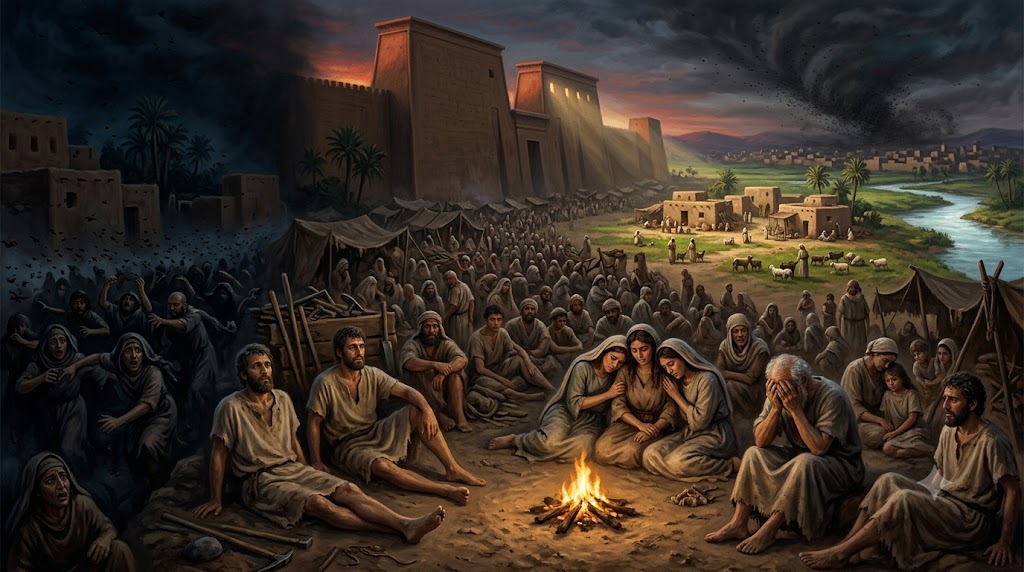
😔 Act Two — The People Will Not Listen: Moses in the Depths of Discouragement (Verses 9–12)
The majestic proclamation was complete. Moses delivered it to the people. But—
“So Moses spoke thus to the children of Israel; but they did not heed Moses, because of anguish of spirit and cruel bondage.”
They did not heed.
Their spirits were crushed. Their bodies were broken by impossible labor quotas. God’s magnificent six-promise declaration reached their ears—and found no place to land. Four hundred years of slavery had compressed their interior world to the point where the language of hope had become unintelligible.
This was not primarily a failure of faith. This was the diagnostic signature of generational trauma. A soul oppressed long enough loses its capacity to process good news. God knew this. Which is why He would not rely on words alone—He would demonstrate with actions of such overwhelming scale that even crushed spirits would be compelled to witness.
God commanded Moses again. Return to Pharaoh. Moses objected again.
“Moses spoke before the LORD, saying, ‘The children of Israel have not heeded me. How then shall Pharaoh heed me, for I am of uncircumcised lips?'”
If Israel won’t listen, Pharaoh certainly won’t. And I cannot speak. Moses’ fear had resurfaced in full—the deepest discouragement available to a commissioned person: I speak and no one receives it. I am sent and nothing changes. I obey and conditions deteriorate.
But God had not finished.
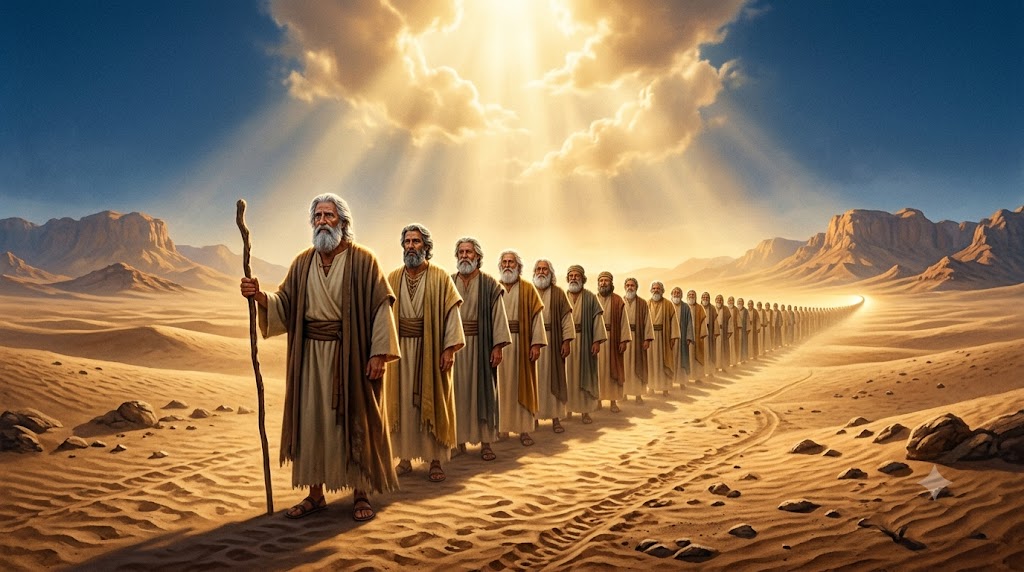
📜 Act Three — The Genealogy of Moses and Aaron (Verses 13–27)
At this precise juncture, the narrative pauses. A genealogy appears.
The descendants of Reuben, Simeon and Levi are enumerated. Within the Levite lineage, the ancestry of Moses and Aaron is recorded in careful detail.
“Amram took for himself Jochebed, his father’s sister, as wife; and she bore him Aaron and Moses. And the years of the life of Amram were one hundred and thirty-seven.”
Why a genealogy here—at the lowest point of Moses’ discouragement?
Several things are being accomplished simultaneously. First, the official registration of who Moses and Aaron are within the covenant community—they did not materialize from nowhere but emerged from within the specific lineage of God’s covenant people. Second, the demonstration of covenant continuity across centuries—from Abraham to Isaac to Jacob to Levi to Amram to Moses and Aaron—the promise had been flowing through specific human lineages for generations without interruption. Third—and perhaps most significantly for the narrative moment—the genealogy answers Moses’ deepest question. Who am I? You are the man born within the covenant lineage, positioned by the sovereign God within the exact generational sequence that delivers you to this assignment. Your identity is not accidental.
🔁 Act Four — The Recommissioning: Back to Pharaoh (Verses 28–30)
The genealogy concludes. The narrative resumes.
“And it came to pass, on the day the LORD spoke to Moses in the land of Egypt, that the LORD spoke to Moses, saying, ‘I am the LORD. Speak to Pharaoh king of Egypt all that I say to you.'”
Again—I am the LORD. The declaration repeats. Every time despair surfaces, every time fear reasserts itself—God returns to the same anchor. I am the LORD. Nothing about Me has changed. The same God who spoke from the burning bush is speaking now.
Moses remained unconvinced of his own adequacy.
“But Moses said before the LORD, ‘Behold, I am of uncircumcised lips, and how shall Pharaoh heed me?'”
The third repetition of the same self-assessment. I cannot speak. This is the remarkable texture of this chapter—Moses’ repeated inadequacy does not disqualify him. God continues to commission him anyway. The calling does not wait for the called one to feel ready. It proceeds through the willing, however imperfectly they are prepared.
Moses’ recurring fear. God’s recurring commission. This tension is the beautiful paradox that runs through the entire Exodus—the perfect work of God accomplished through the imperfect vessel of a reluctant, speech-impaired, repeatedly discouraged shepherd.
🕊️ Reflection — The Name Proclaimed at the Bottom of Despair
The heart of Exodus Chapter 6 is three words: I am the LORD.
Moses had lamented. The people had refused to listen. The situation had worsened. The commission had appeared to collapse. And into the middle of all of that—God did not change the circumstances. He proclaimed who He was.
In the crisis of faith, what fractures first is rarely belief in God’s power in the abstract. What fractures is belief that God’s power will be activated specifically on one’s behalf. The six covenant promises of Exodus 6 speak directly into that fracture—God moves for you, God acts toward you, God remembers you specifically.
Is your spirit crushed? Are you so compressed by the weight of prolonged hardship that even good news fails to penetrate? That is not a spiritual failure—that is the honest condition of a soul that has been under too much for too long. God knows. He will not come to you only with words. He will come with actions that cannot be denied.
I am the LORD. That name is being proclaimed over your despair today.
“Is your spirit so crushed that even God’s good words fail to reach you today? He still speaks. ‘I am the LORD.’ That name is larger than your despair. And He is about to act.”
📣 Coming Up Next
Exodus Chapter 7 — The First Plague: The River Runs Red
God positions Moses and Aaron before Pharaoh once more. Aaron’s staff becomes a serpent and consumes the serpents of Egypt’s magicians. Then the Nile—the sacred artery of Egyptian civilization—turns to blood. The man who asked “Who is the LORD?” is about to begin receiving his answer. The first of ten devastating demonstrations commences in the next episode.
#Exodus6 #IAmTheLord #CovenantReaffirmed #SixPromises #ElShaddai #YHWH #GenealogyOfMoses #CrushedSpirit #MosesDoubt #GodsName #CovenantPeople #RecommissionedByGod #BibleStudy #ChristianBlog #Exodus #OldTestament #Scripture #Church #DailyDevotional #BiblicalFaith