Genesis Series — Episode 36
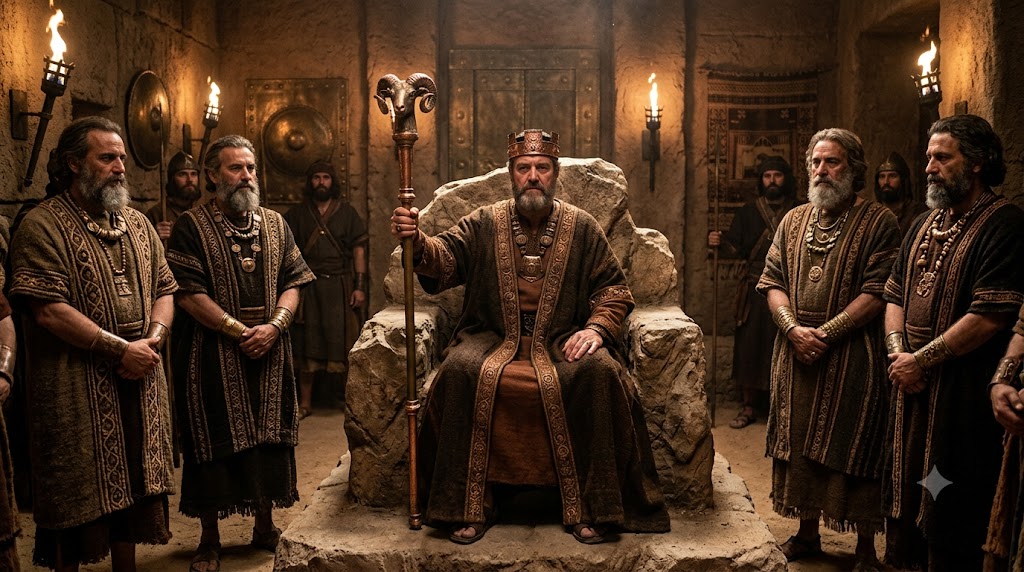
🔥 Prologue — Conceding Territorial Sovereignty to Secure Secular Autonomy inside Mount Seir
While the purified community of Jacob re-established their altars at Bethel and occupied the high strategic areas of Canaan, the sovereign chronometer of Scripture temporarily shifted its focus onto the lineage of Esau. Esau historically despised his birthright over a solitary bowl of red stew and allowed his blessing to be intercepted. Yet, under the vast parameters of the Creator’s common grace, his private estate experienced an absolute explosion of material wealth and physical prosperity.
When the pastoral assets accumulated by the two brothers breached the carrying capacity of Canaan, making it impossible to cohabitate, Esau executed a strategic departure. He gracefully conceded the Promised Land to Jacob, mobilizing his immense clans to occupy the rugged, crimson rock fortresses of Mount Seir. Long before Israel established its absolute first administrative king, the house of Esau had already engineered a highly sophisticated royal regime and tribal dynasty known as Edom. Step into the sprawling, sovereign catalog of the Edomite empire.
🌙 Act One — Esau’s Wives and the Great Migration to Seir (Verses 1–8)
Now this is the genealogy of Esau, who is Edom. Esau took his wives from the daughters of Canaan: Adah the daughter of Elon the Hittite; Oholibamah the daughter of Anah, the daughter of Zibeon the Hivite; and Basemath, Ishmael’s daughter, sister of Nebajoth. Now Adah bore Eliphaz to Esau, and Basemath bore Reuel. And Oholibamah bore Jeush, Jalam, and Korah. These were the sons of Esau who were born to him in the land of Canaan.
“Then Esau took his wives, his sons, his daughters, and all the persons of his household, his cattle and all his animals, and all his goods which he had acquired in the land of Canaan, and went to a country away from the presence of his brother Jacob…”
For their possessions were too great for them to dwell together, and the land where they were strangers could not support them because of their livestock. So Esau dwelt in Mount Seir. Esau is Edom.
💛 Second Act — The Genealogy of Esau’s Heirs and the Dukes of Edom (Verses 9–30)
And this is the genealogy of Esau the father of the Edomites in Mount Seir. These were the names of Esau’s sons: Eliphaz the son of Adah the wife of Esau, and Reuel the son of Basemath the wife of Esau. And the sons of Eliphaz were Teman, Omar, Zepho, Gatam, and Kenaz. Now Timna was the concubine of Eliphaz, Esau’s son, and she bore Amalek to Eliphaz. These were the sons of Adah, Esau’s wife. These were the sons of Reuel: Nahath, Zerah, Shammah, and Mizzah. These were the sons of Basemath, Esau’s wife.
These were the chiefs of the sons of Esau. The sons of Eliphaz, the firstborn son of Esau: Chief Teman, Chief Omar, Chief Zepho, Chief Kenaz, Chief Korah, Chief Gatam, and Chief Amalek. These were the chiefs of Eliphaz in the land of Edom. These were the sons of Reuel, Esau’s son: Chief Nahath, Chief Zerah, Chief Shammah, and Chief Mizzah.
“These were the sons of Seir the Horite who inhabited the land: Lotan, Shobal, Zibeon, Anah, Dishon, Ezer, and Dishan. These were the chiefs of the Horites, the sons of Seir in the land of Edom…”
By marrying into the local indigenous lineages, Esau’s house systematically absorbed the Horite clans, establishing a formidable tribal confederacy inside the rock defenses of Mount Seir.
👐 Act Three — The Kingly Successions of Edom Before Israel’s Monarchy (Verses 31–43)
“Now these were the kings who reigned in the land of Edom before any king reigned over the children of Israel…”
Bela the son of Beor reigned in Edom, and the name of his city was Dinhabah. And when Bela died, Jobab the son of Zerah of Bozrah reigned in his place. When Jobab died, Husham of the land of the Temanites reigned in his place. And when Husham died, Hadad the son of Bedad, who defeated Midian in the field of Moab, reigned in his place; and the name of his city was Avith. When Hadad died, Samlah of Masrekah reigned in his place. When Samlah died, Shaul of Rehoboth-by-the-River reigned in his place. When Shaul died, Baal-Hanan the son of Achbor reigned in his place. And when Baal-Hanan the son of Achbor died, Hadar reigned in his place; and the name of his city was Pau. His wife’s name was Mehetabel.
And these were the names of the chiefs of Esau, according to their families and their places, by their names: Chief Timna, Chief Alvah, Chief Jetheth, Chief Oholibamah, Chief Elah, Chief Pinon, Chief Kenaz, Chief Teman, Chief Mibzar, Chief Magdiel, and Chief Iram. These were the chiefs of Edom.
🕊️ Reflection — Building Passing Monuments in Mount Seir While Bypassing the Weight of the Covenant
Genesis Chapter 36 maps out a fascinating layer of spiritual compensation, documenting what happens when a clan trades the geographical coordinates of the promise to construct a highly successful secular dynasty outside the parameters of divine revelation. While the household of Jacob remained a fragile, nomadic collective of simple shepherds holding zero localized infrastructure in Canaan, Esau’s descendants had already scaled their development, organizing an advanced league of tribal chiefs and an absolute royal monarchy. To a casual contemporary auditor, Esau’s rate of expansion was vastly superior.
Yet, the strategic design of the Holy Spirit in condensing Esau’s sprawling 400-year history into a solitary chapter is to verify a permanent baseline: the rapid acceleration of secular kingdoms is entirely eclipsed by the slower, painful processing of those through whom the Covenant Seed (the Messiah) must proceed. Esau secured his red stone fortress at Seir, but his name dissolved into the dry margin of redemptive exclusion. “Today, are you becoming deeply discouraged because the execution of your calling seems frustratingly slow compared to the rapid, glittering advancements of your secular peers? Do not trade your spiritual heritage for the immediate luxury of Mount Seir. Refuse to envy the passing dynasties of Edom. Trust the painful, slow maturation of your Altar, knowing that the ultimate victory belongs to those who dwell under the unyielding Word of God.”
📣 Coming Up Next
Genesis Chapter 37 — Joseph’s Dreams and the Pit: The Fabric of Envy and the Cosmic Vision, The Dark Exodus Initiating Egypt’s Sovereign Timeline At the age of seventeen, Joseph emerges as the central figure of the patriarchal narrative. Discover how his prophetic dreams and the colorful tunic of his father’s favoritism trigger a dangerous wave of jealousy, culminating in his brothers casting him into a waterless pit in Dothan.
#Genesis36 #EsauGenealogy #EdomiteAncestry #MigrationToSeir #TooWealthyToDwellTogether #HoriteClans #ChiefsOfEdom #KingsOfEdom #SecularVelocity #PromisedLandCanaan #JacobLineage #CommonGrace #EternalWeight #Christian #Bible #Meditation #Genesis #TheWord #BibleStudy #Church #ChristianBlog #BibleMeditation