Deuteronomy is the fifth book of the Bible, and the final book of the Torah. After the Exodus, Israel spends a full year at Mount Sinai, establishing a covenant relationship with God. But the Exodus generation, tested through a harrowing journey in the wilderness, is ultimately disqualified from entering the land God promised to Abraham.
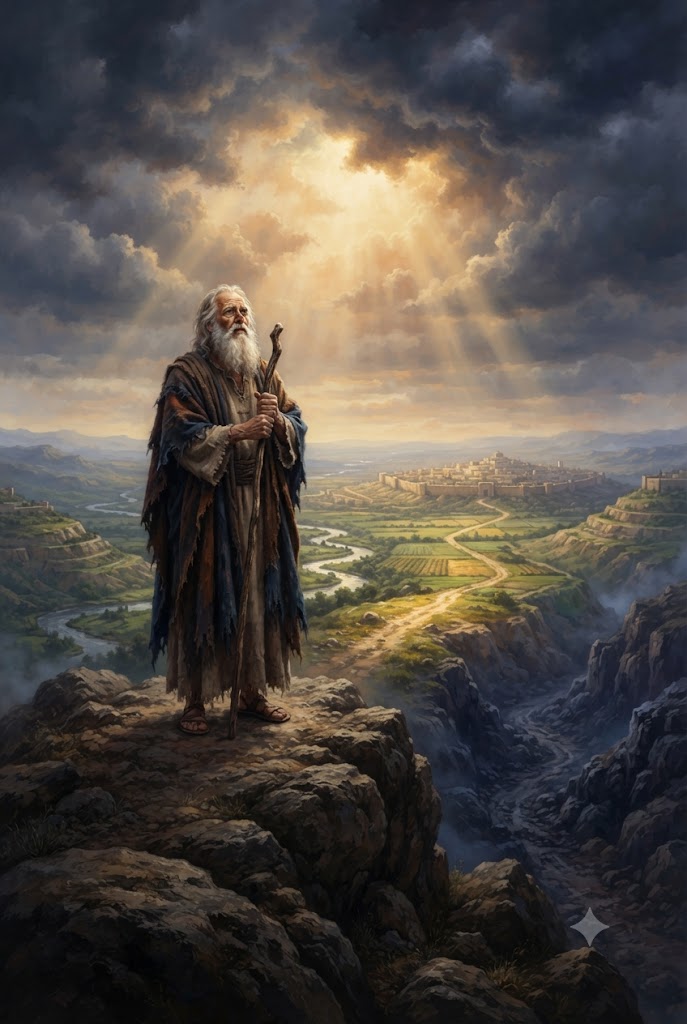
So Deuteronomy begins with Moses standing before an entirely new generation, explaining the Torah to them. The book itself is structured as a series of speeches by Moses, urging this new generation to remain faithful to the covenant with God. At the center of the book sits a collection of laws representing that covenant. Some are new, but most are simply repetitions of what was already given at Sinai. In fact, that’s where the book gets its name—the Greek word Deuteronomion literally means “second law.” Moses’ speeches frame these laws on either side, divided into two major sections.
The First Sermon and the Shema
Moses opens by reviewing the past, honestly acknowledging how disobedient the previous generation had been. And yet, in stark contrast, God had provided for them with unwavering grace throughout the wilderness. Even in discipline, God never forgot His covenant. Through this earnest sermon, Moses urges the new generation to be more faithful than their parents ever were.
Right in the middle of this section, after recalling the Ten Commandments, comes one of the most famous passages in all of Scripture—the Shema:
“Hear, O Israel: The Lord our God, the Lord is one. You shall love the Lord your God with all your heart and with all your soul and with all your might.”
This phrase became a central daily prayer in Judaism, and it ties together every theme in Deuteronomy. In Hebrew, “Shema” means far more than simply “to hear”—it carries the sense of responding to what is heard, of obedience itself. Likewise, the Hebrew word for “love” here isn’t just emotion; it’s a wholehearted commitment—will, feeling, thought, and mind all devoted to God.
Israel’s obedience serves a much larger purpose. By keeping the law, they become a treasured nation among the nations—a kingdom of priests, just as God declared at Sinai—displaying His wisdom and justice to the watching world.
Another core piece of the Shema is exclusivity: Israel is to devote itself to the one and only Lord. As they prepare to enter Canaan, a land filled with peoples worshiping gods of sun, storm, and war, Moses warns that idolatry degrades humanity and unravels communities. Worshiping the true God of creation and redemption, by contrast, is the path to life and blessing.
The Collection of Laws
At the heart of Deuteronomy lies a body of law, arranged into four major sections. It begins with instructions on worship—Israel was to worship the one true God at a single central sanctuary, and to express that worship through generosity, setting aside a tenth of their income for the sanctuary, and another tenth every three years for the poor. These practices made Israel more just than the nations around them—all of it flowing from true worship.
Next come laws governing leadership. Elders, priests, and kings were all placed under the authority of the covenant law, with prophets sent by God to hold them accountable. Unlike the surrounding nations, which deified their kings and placed them above the law, Israel’s leaders remained subject to it. From there, the laws move into everyday life—marriage, family, business—along with social justice, including protections for widows, orphans, and immigrants, before returning once more to matters of worship.
How to Read These Laws
A few principles help in reading this section well. First, remember these laws were given to ancient Israel as the terms of the Sinai covenant, within a radically different cultural setting. Second, comparing them directly to modern law misses the point—they’re better understood alongside the laws of Israel’s ancient neighbors, like Assyria or Babylon. Seen that way, laws that once seemed harsh reveal something remarkable: God was calling Israel to a far higher standard of justice than the world had ever seen. And finally, look for the underlying wisdom and justice behind each specific law—that’s often where the deepest meaning is found.
The Final Exhortation: Life and Death
After laying out the laws, Moses delivers his final appeal—urging Israel to listen to and love God. He frames it as a stark choice: obedience brings blessing; rebellion brings discipline, plagues, and ultimately exile from the land.
Then comes one of the most piercing lines in all of Scripture:
“I have set before you life and death, blessing and curse. Therefore choose life, that you and your offspring may live, loving the Lord your God, obeying his voice and holding fast to him.”
And yet, Moses adds something sobering—he already knows that after his death, Israel will turn away and be driven from the land. After decades leading this people, his hope for their future isn’t large.
But it isn’t hopeless, either. Moses declares that when exiled Israel eventually turns back to God, the Lord Himself will circumcise their hearts—enabling them, at last, to love Him fully and receive true life. It’s a striking image, revealing just how deeply flawed the human heart truly is, a brokenness tracing all the way back to Eden, where humanity first chose to define good and evil by its own desires rather than God’s.
Still, Moses declares that one day, God will transform His people’s hearts so they can genuinely love and follow Him. This same hope is later echoed by the prophets Jeremiah and Ezekiel, who speak of a coming new heart. With that, Moses finishes his sermon, climbs the mountain a final time, and dies.
Conclusion
And so the Torah comes to a close—leaving behind several profound tensions, still unresolved. When will the offspring of the woman finally come to crush evil? How will God use this offspring to rescue the world and bless every nation? And how can a holy God ever reconcile with a disobedient people, transforming their hearts at last?
To find those answers, the story must continue. But for now—that is Deuteronomy.
Tags: #Deuteronomy #Torah #Shema #Moses #BookOfDeuteronomy #ChooseLife #Covenant #TenCommandments #BibleOverview #BibleStudy #KJVBible #Christian #Christianity #BibleStory #OldTestament #BibleSummary #FaithJourney #GodsLaw #NewHeart