PROLOGUE — How to Read Judges
Judges 2 provides the theological framework necessary to understand this entire book. Without this chapter, the rest of Judges could easily seem like a mere collection of scattered anecdotes. But chapter 2 clearly explains the cyclical pattern that binds all these stories together as one.
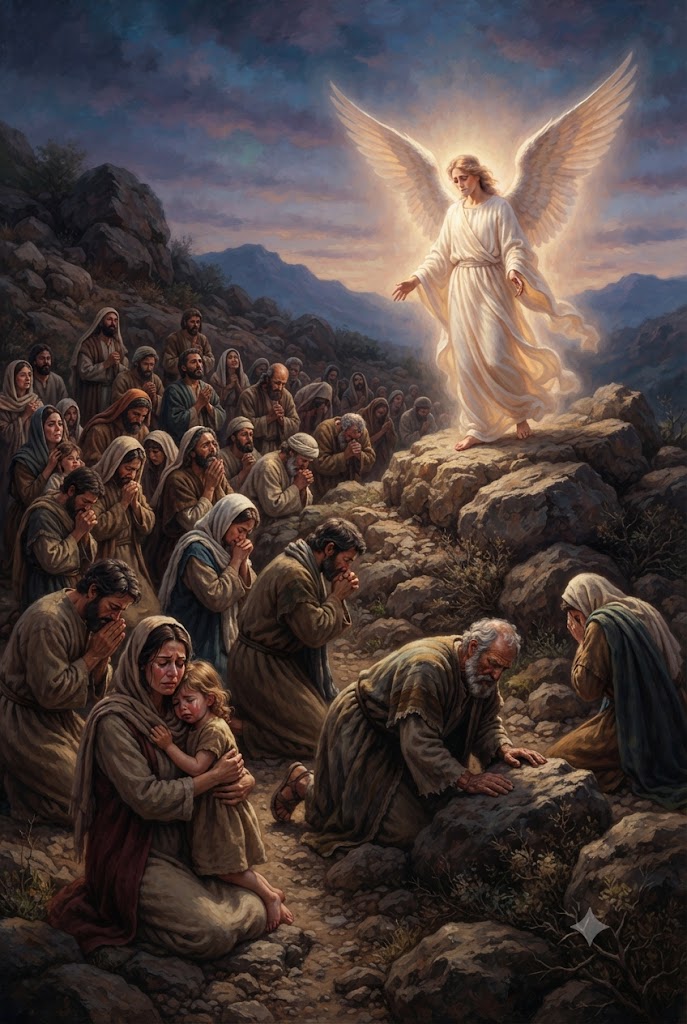
ACT ONE — Rebuke and Weeping at Bochim (verses 1–5)
“And an angel of the LORD came up from Gilgal to Bochim, and said… I will not drive them out from before you; but they shall be as thorns in your sides, and their gods shall be a snare unto you… And the people lifted up their voice, and wept. And they called the name of that place Bochim: and they sacrificed there unto the LORD.”
Thorns in your sides… a snare unto you. This was God’s official response to the incomplete conquest listed in chapter 1 — the enemies Israel had left behind would now become not a blessing, but a continual source of temptation and testing. The people wept bitterly at this rebuke, yet sadly, those tears never led to actual repentance.
ACT TWO — Contrast Between Joshua’s Generation and the Next (verses 6–10)
“And when Joshua had let the people go, the children of Israel went every man unto his inheritance to possess the land… And the people served the LORD all the days of Joshua, and all the days of the elders that outlived Joshua, who had seen all the great works of the LORD, that he did for Israel.”
This precisely repeats the closing sentence of Joshua 24. But now, the true meaning of that sentence is revealed.
“And also all that generation were gathered unto their fathers: and there arose another generation after them, which knew not the LORD, nor yet the works which he had done for Israel.”
Which knew not the LORD. This brief sentence summarizes one of the most tragic generational breaks in all of Scripture. Once the generation that had directly witnessed God’s miracles passed on, the next generation, never having received that story, moved in an entirely different direction. This was the failure of the intergenerational transmission of faith so strongly emphasized in Deuteronomy 6.
ACT THREE — The Six-Stage Cycle (verses 11–19)
The core of this chapter, the cyclical structure that will govern the entirety of Judges, is now clearly presented.
“And the children of Israel did evil in the sight of the LORD, and served Baalim… And the anger of the LORD was hot against Israel, and he delivered them into the hands of spoilers that spoiled them… and they were greatly distressed. Nevertheless the LORD raised up judges, which delivered them out of the hand of those that spoiled them.”
This pattern is clearly delineated — ① sin (idolatry), ② God’s anger and discipline (handed over to an enemy), ③ suffering and crying out, ④ deliverance through a judge, ⑤ a period of peace, and ⑥ renewed corruption once the judge dies.
And the text explicitly states that this cycle never improved, but only worsened.
“And it came to pass, when the judge was dead, that they returned, and corrupted themselves more than their fathers.”
Corrupted themselves more than their fathers. This is a heavy sentence foreshadowing the entire trajectory of Judges — with each repetition of the cycle, Israel would sink further into deeper corruption.
The Next Generation Turning Toward Idols
ACT FOUR — The True Purpose of the Remaining Nations (verses 20–23)
This chapter closes with a remarkably deep theological explanation.
“I also will not henceforth drive out any from before them of the nations which Joshua left when he died: That through them I may prove Israel, whether they will keep the way of the LORD to walk therein, as their fathers did keep it, or not.”
That through them I may prove Israel. The enemies left behind were never merely evidence of Israel’s failure — God also used them as an instrument to continually test Israel’s faith. This shows that God’s sovereignty remained at work even in the very midst of human failure.
REFLECTION — Reading the Chapters Ahead with the Key to the Cycle in Hand
The most practical value Judges 2 gives us is providing the exact framework for interpreting the stories of the twelve judges yet to come. Each judge’s appearance is never random, but an exact reenactment of this six-stage cycle.
If there is a repeating pattern of sin, suffering, crying out, and deliverance in your own life, can you receive it as evidence that God is still faithfully intervening?
NEXT EPISODE PREVIEW
Judges Chapter 3 — the stories of the first three judges, Othniel, Ehud, and Shamgar, actually unfold this cycle in practice.
Tags: #Judges2 #RebukeAtBochim #WhichKnewNotTheLord #CycleOfSinPunishmentCryingOutDeliverance #CorruptedMoreThanTheirFathers #ThatIMayProveIsrael #Judges #BibleDevotional #ChristianBlog #BibleStudy #OldTestament #Bible #Church #Devotion #Christianity #FailureOfIntergenerationalFaith #TheKeyToReadingJudges #DailyDevotional